
TRUMP'S MIGRANT DEPORTEES IN AFRICA & OTHER STORIES

NOTE TO READERS: This article is mainly about Trump's migrant deportees forcibly transported to Africa, but it contains the usual meandering digressions into historical and current events on the continent.
If you like my work, and feel like making a small donation, then kindly make for my Tip Jar at Buy Me A Coffee.
PART I: US PROPOSES, NIGERIA REJECTS
Shortly before he imposed visa restrictions on Nigerians visiting USA, President Donald Trump demanded that Nigeria’s Federal Government accept Venezuelan deportees. Nigeria promptly refused the demand despite threats and refused to budge after the Orange Strongman acted on the threats.
Trump has probably heard of the legendary corruption of Nigerian government officials, but it is likely that he has never heard of their pride, their ego and their firm belief that the vast multiethnic federation is indeed the “Giant of Africa”, which should never be pushed around by foreigners, especially ones from thousands of miles across the Atlantic Ocean.
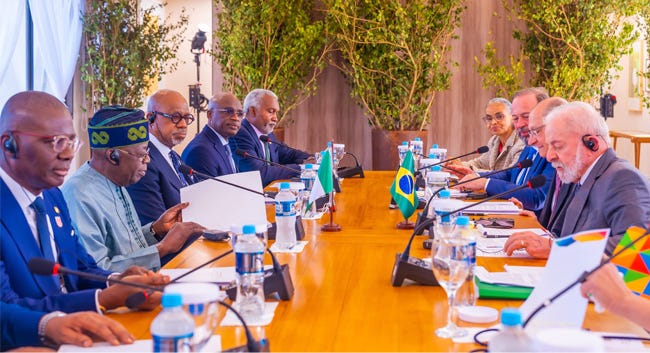
It was a pride that another US President, George Walker Bush, grossly underestimated at the beginning of the 2000s. Alarmed at the speed with which Chinese influence was advancing on the continent of Africa, the Bush Administration announced its intention to create the African Military Command (AFRICOM). Shortly after, it began to search for African nations willing to host its headquarters.
Given its strategic position in the petroleum-rich Gulf of Guinea, Nigeria received multiple requests from US government officials for talks on hosting the military headquarters. The requests were all turned down.
When Liberia announced its willingness to host the AFRICOM headquarters, the Nigerian government sent an immediate démarche to the Liberian government, which at the time was reliant on Nigeria’s police and army to maintain law and order within its war-devastated territory.
Nigeria’s position was clear. AFRICOM won’t be allowed to host its headquarters anywhere in West Africa.
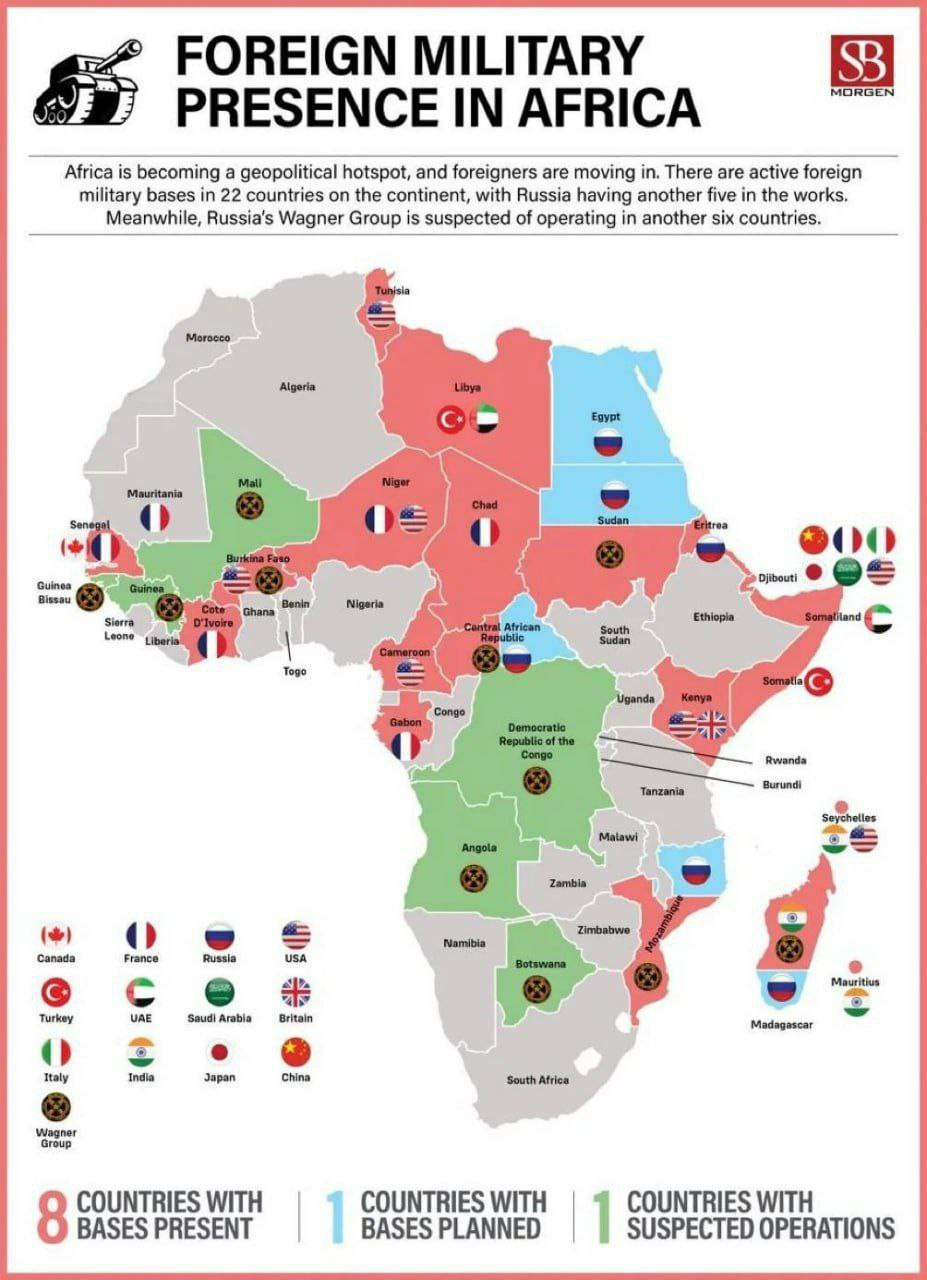
This decision was not made because of any “anti-imperialist” sentiments. Nigeria enjoys excellent diplomatic relations with USA. The decision was made because Nigeria’s political establishment sees the country as the regional economic and military hegemon of West Africa and did not want to be overshadowed by the United States in its own neck of the woods. It was hard enough having to deal with the then entrenched presence of France in certain Francophone countries in the subregion.
Of course, Nigeria did not object to Americans bringing small numbers of military advisers to train its armed forces. That would mirror the longstanding cooperation between the Nigerian armed forces and the militaries of India, Pakistan, Egypt and the United Kingdom.
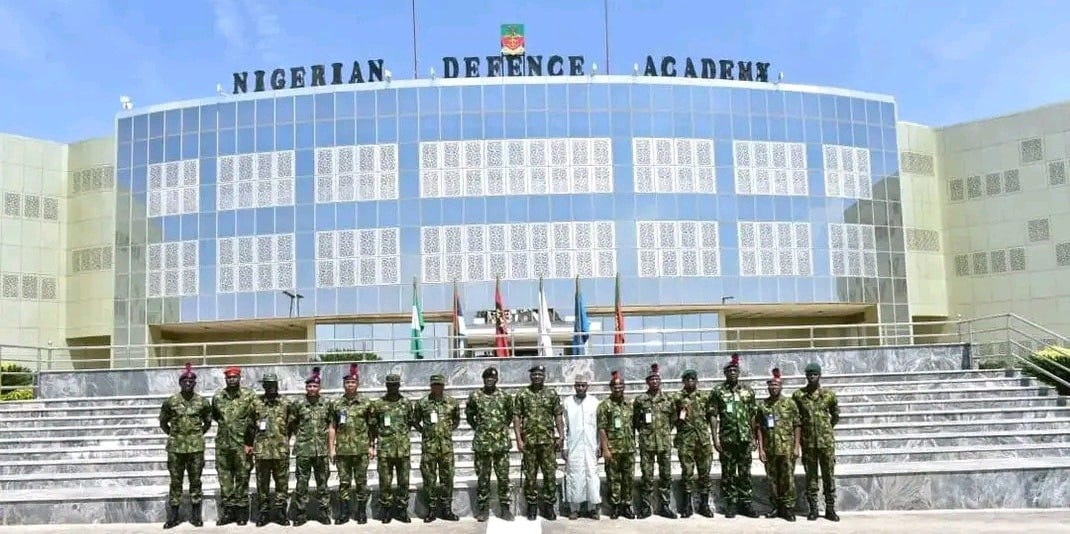
The Indian Army played an immeasurable role in the establishment of Nigeria’s sole military university in 1964. Today, the Nigerian Defence Academy (NDA), has 2,500 officer cadets in training. These include cadets from other African countries. In addition to officer cadets, the military university also enroll civilian students into its BSc, MSc and PhD degree programmes.
Nigeria also has longstanding military ties with Pakistan, which goes back to the 1960s. In recent years, Nigerian Navy sailors underwent training in Pakistan on how to use Chinese-made submarines. The Nigerian Navy has plans to buy submarines from China and want its personnel to benefit from Pakistan Navy’s experience using them.
Recently, the Nigerian Army signed a training and cooperation agreement with China’s Peoples Liberation Army.
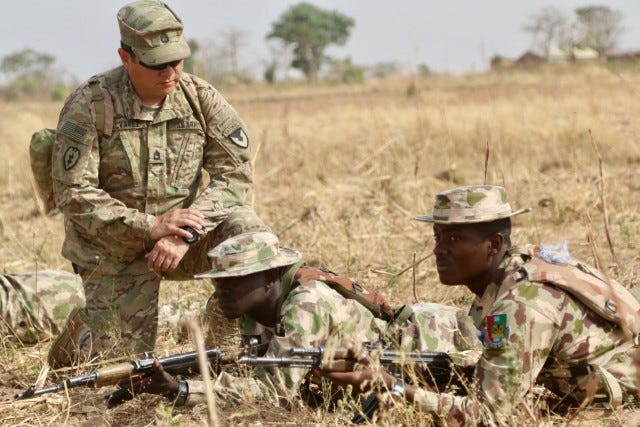
Nigeria also has a military training scheme with USA as shown in the photograph above. However, the US government intensely dislikes the straitjacket terms that comes with such schemes.
The United States prefers the freedom of geopolitical manoeuvre that ownership of military bases in foreign countries gives it. Therefore, the pressure on Nigeria to grant military bases never stopped, even after the Bush Administration ceased to exist on 20 January 2009.
In 2012, the Obama Administration asked Nigeria to send troops to Somalia to fight Al-Shabaab terrorists. This was promptly rejected as Nigeria had no security interests in Somalia beyond making sure that its commercial ships are not hijacked by seafaring pirates. But that same year, Nigeria organized for ECOWAS troops to intervene in Guinea-Bissau where it has real regional security interests.
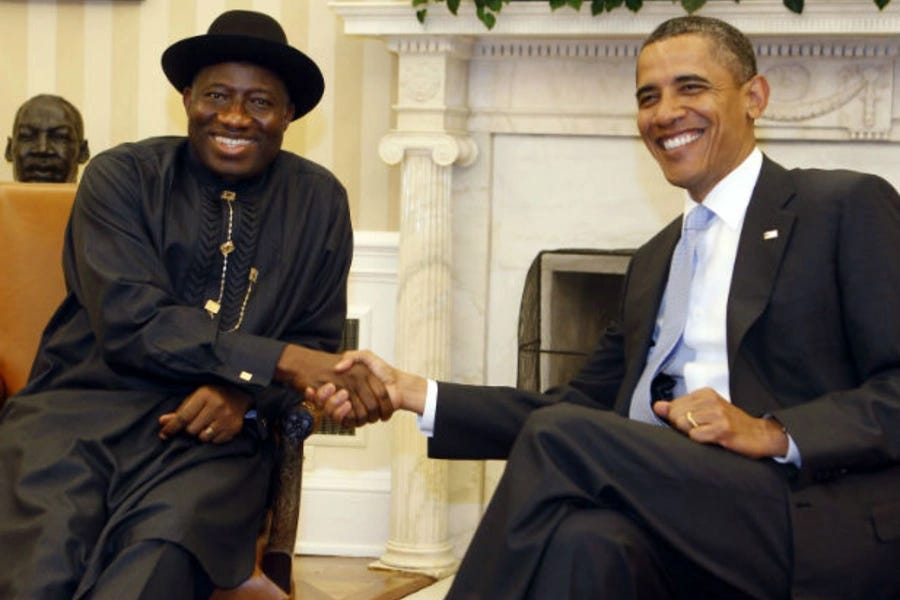
In 2015, President Obama renewed the longstanding campaign of the United States to gain a military base on Nigerian soil. Following the menace of Boko Haram terrorists, the Obama Administration repeatedly made offers to send US troops to “help Nigeria fight the terrorists”.
The Nigerian government politely rejected the offer, but requested American-made weapons for Nigerian troops fighting the terrorists. The Obama Administration denied the request, citing the usual memetic allegations of “human rights abuses”.
The US troops meant for Nigeria eventually went to neighbouring Niger Republic, which had granted the Americans the desired military bases in 2012. Nigeria did not express any objections to the US move as Niger has always had large contingents of foreign soldiers (i.e. French troops) on its territory ever since France conjured it into existence in 1880.
Almost a decade after President Obama sent them there, US troops would be asked to leave those bases by a military junta composed almost entirely of US-trained Niger army officers.
PART II: DIGRESSION INTO NIGER REPUBLIC
Contrary to what many believe, the Americans were not asked to leave because of any “anti-imperialist” sentiment on the part of the Niger junta. All the “anti-imperialist” rage was focussed exclusively on France. The French Ambassador was kicked out. The expulsion of 1, 500 French troops and the closure of their military base followed later.
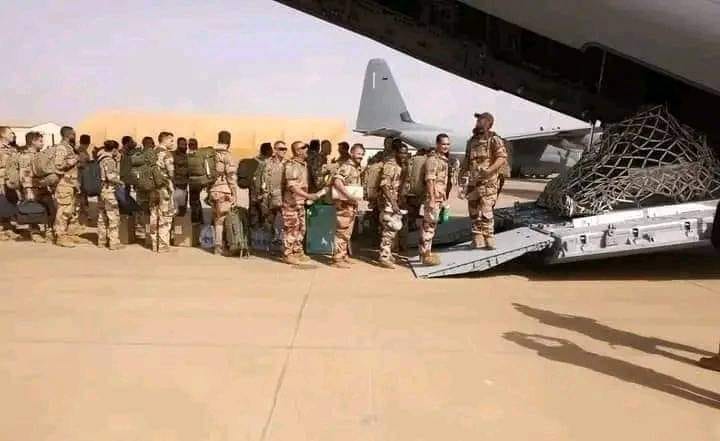
After the 2023 coup d’etat, the Biden Administration imposed economic sanctions, froze 200 million dollars in donor aid and repeatedly called on the Niger military junta to disband. Despite all of that, junta officials persisted in making friendly gestures towards the Americans until policy-makers within the Biden Administration finally shot themselves in both kneecaps.
The State Department announced that 1,100 US troops stationed in Niger would halt military cooperation on grounds that the junta was “secretly” planning to sell uranium to Iran and import Russian mercenaries. The first allegation was false. The second allegation was true.
After the Biden Administration declared that American troops stationed in Niger would no longer cooperate with local authorities, the junta had no choice but to revoke the United States-Niger Military Cooperation Agreement signed in 2012.
As explained in an interesting Newsweek article, American troops stationed in Niger Republic idled away for months inside their military bases, leaving Niger soldiers to battle alone against jihadi terrorists rampaging across the land.
The token civilian official in the military junta, Mr. Ali Mahaman Lamine Zeine, blamed the Biden Administration for destroying Niger’s military partnership with United States.
In an exclusive interview with the Washington Post, published on 14 May 2024, Mr. Lamine confirmed that US troops refused to help the junta in its fight against jihadi insurgents:
“ The Americans stayed on our soil, doing nothing while the terrorists killed people and burned towns. It is not a sign of friendship to come on our soil but let the terrorists attack us. We have seen what the United States will do to defend its allies, because we have seen Ukraine and Israel.”
In other words, the junta’s decision to cancel the USA-Niger Military Cooperation Agreement was not influenced by any principled “anti-imperialist” ideology, but by simple common sense. If foreign military troops in your country are no longer willing to cooperate with you, then it is only logical to ask them to leave.
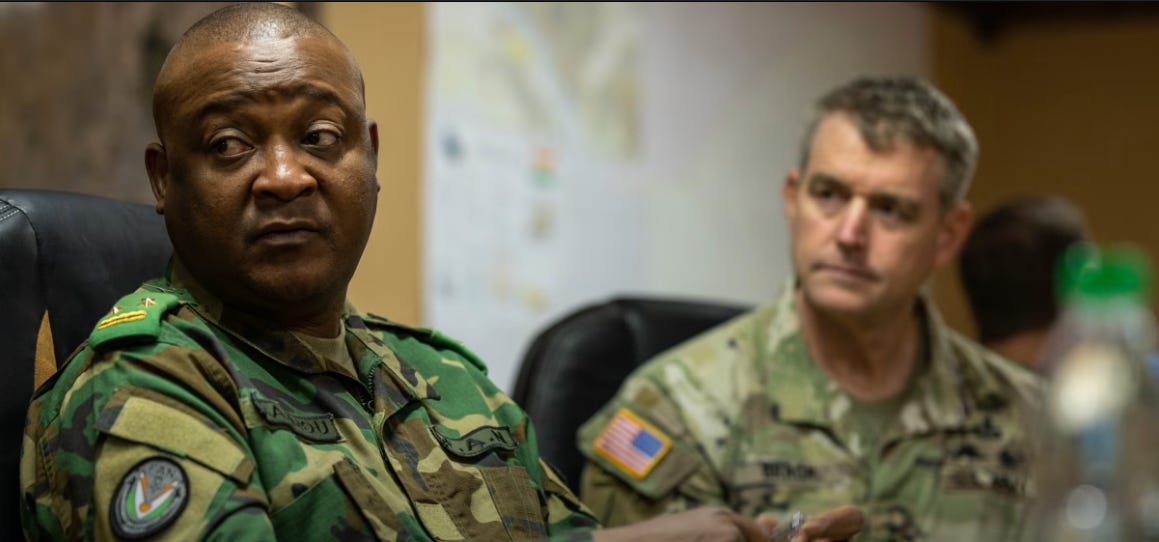
Despite the cancellation of the military cooperation agreeement, the Niger junta remained largely on friendly terms with the United States. Unlike her French counterpart, US Ambassador Kathleen FitzGibbon did not face expulsion. Rather than impose an arbitrary deadline, the junta negotiated with the Biden Administration to find a mutually convenient date for the withdrawal of US troops.
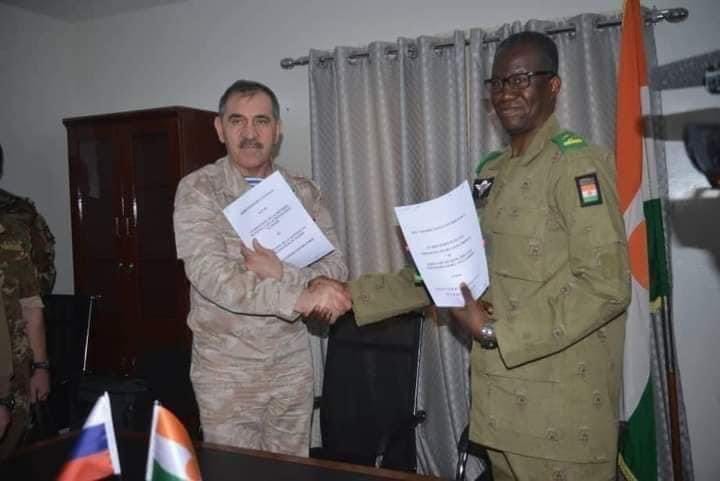
When it was announced that Russia’s Wagner mercenaries-turned- government paramilitary troops (Afrika Korps) would begin to arrive in Niger Republic, the Americans threw a tantrum.
The Biden Administration sent a Pentagon official to Niamey to state categorically that US troops would not share quarters with the advance party of 60 Russian fighters. Defiant, but polite, Niger junta officials informed the visiting Pentagon official that the Russians would be accomodated in one of the two military bases occupied by the US troops.
When personnel of Russia’s Afrika Korps began to arrive in Niger Republic, a humiliated Biden Administration hurriedly relocated some US troops in Air Base 101 in Niamey to Air Base 201 in the city of Agadez. The move was aimed at reducing contact between US troops and the newly arrived Russians.
Nevertheless, the remaining US troops in Air Base 101 cohabited with Russia’s Afrika Korps, much to the horror of numerous US politicians and their mainstream media toadies.
In response to uproar within the United States, the Secretary of Defence at the time, General Lloyd Austin, held a press conference in Hawaii to alleviate the worries of anxious mainstream media propagandists. He assured them:
“The Russians are in a separate compound and don't have access to U.S. forces or access to our equipment.”
Indeed, the former Wagner mercenaries—renamed “Afrika Korps” after coming under proper Russian Defence Ministry control—did not mingle with US troops in Niger. The Russian paramilitary fighters were housed in a separate hangar inside the same air base.
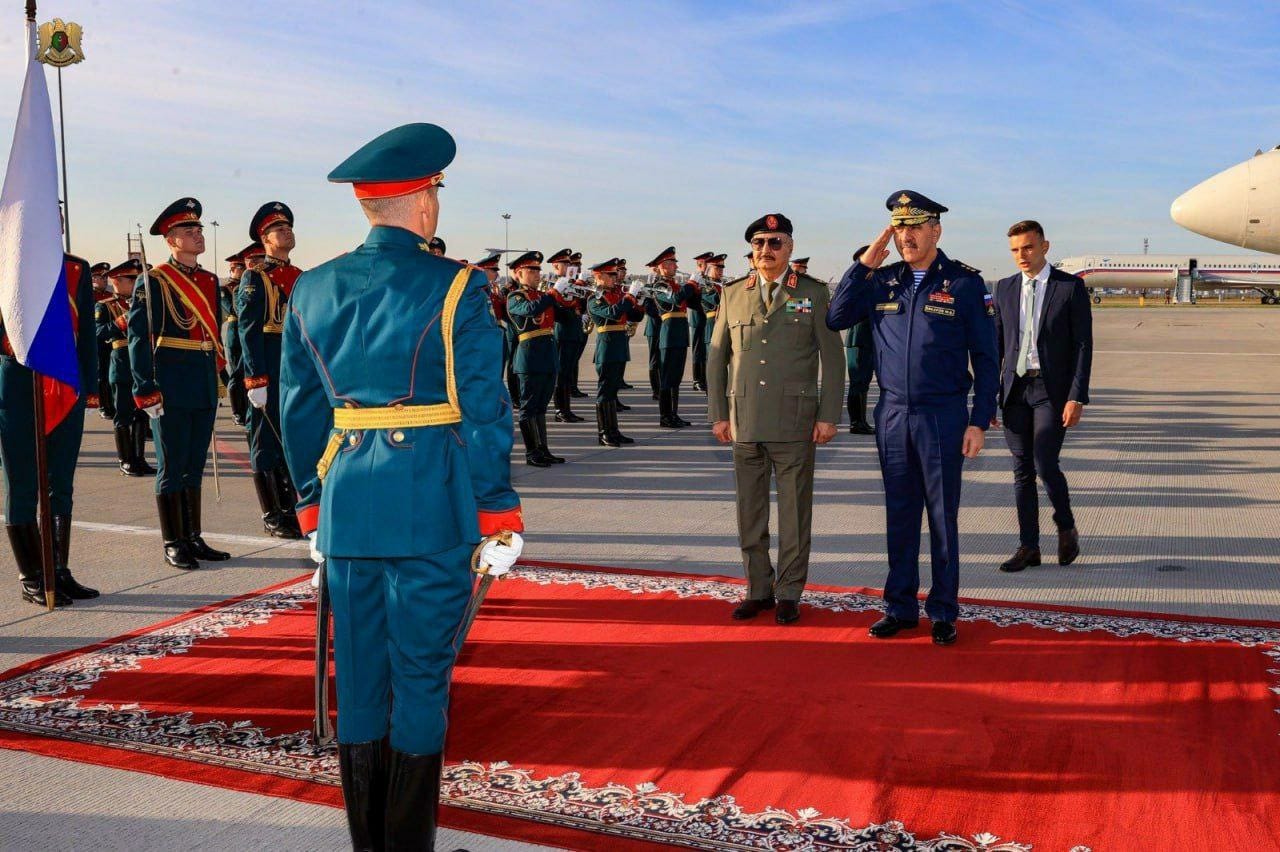
Niger junta’s cancellation of the military cooperation agreement was helpful to Kurt Campbell in the factional war raging inside the Biden Adminstration over whether USA should prioritize Asia above all else or continue its current strategy of spreading its military presence thin across the globe.
As National Security Council Coordinator for the Indo-Pacific, Kurt Campbell favoured prioritizing Asia above all else. On this contentious topic, Kurt Campbell clashed regularly with Under-Secretary of State Victoria Nuland, who preferred the longstanding policy of spreading her country’s armed forces thin across the globe.
After the retirement of Wendy Sherman as United States Deputy Secretary of State, Victoria Nuland was given the job, but only in an acting capacity.
Vicky believed that she would eventually retain the job in a substantive capacity. However, President Biden humiliated her by giving the position to Kurt Campbell. In protest, Vicky resigned from her Under-Secretary role.
Within one month of becoming Deputy Secretary of State, Kurt Campbell accelerated efforts to get US troops out of Niger Republic.
He travelled to Niamey and reached a mutual agreement with the Niger junta to withdraw American troops gradually, starting from July 2024 and ending on 15 September 2024.
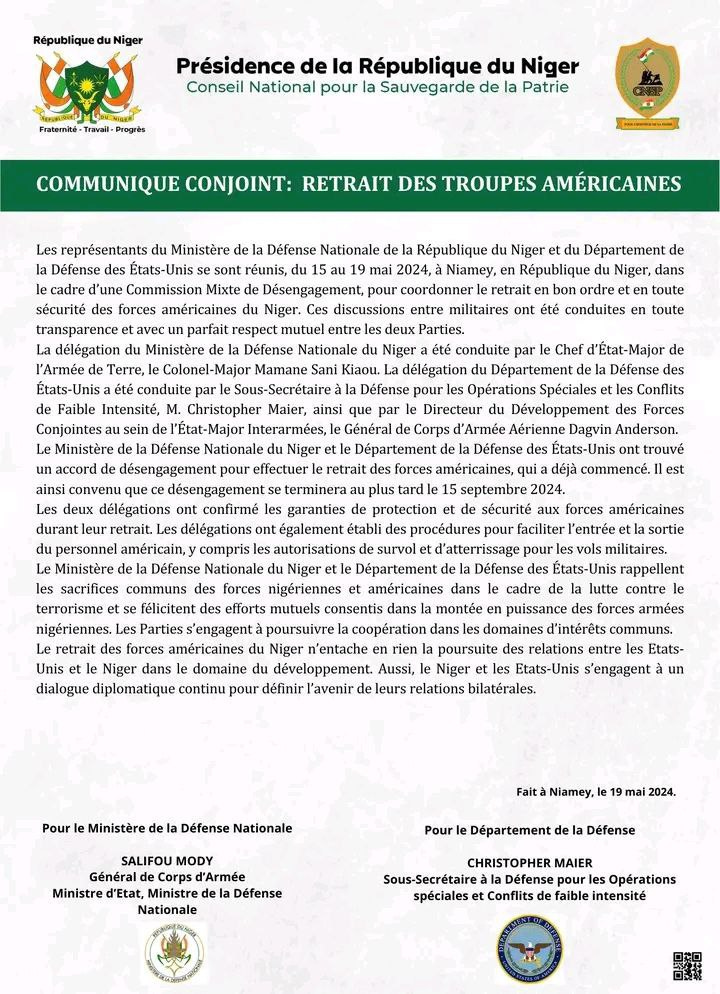
To show there were no hard feelings, the junta and the Pentagon signed a joint communique, affirming their commitment to maintaining good relations after US troops had pulled out by the mutually agreed deadline.
The joint communique signed by junta official, Salifou Mody, and US Assistant Secretary of Defence, Christopher Maier, is available below:
In July 2024, US troops pulled out completely from Air Base 101. Unlike the unceremonious expulsion of French troops, the Niger junta held a ceremony for the departing US troops, which was attended by Ambassador Kathleen FitzGibbon, as shown in the video:
Video showing an US military officer signing documents handing Airbase 101 in Niamey to a representative of the Niger junta:
Before their departure, US troops gave their Niger counterparts a guided tour of the Air Base 101, as shown in the videos below:
Finally, US troops loaded their equipment into a transport plane bound for North America. 600 US troops departed, leaving 500 behind.
Note that the videos depict the handover of Air Base 101 in Niamey back in July 2024. The Americans had a mutual agreement with Niger to handover Air Base 201 on 15 September 2024.
Kurt Campbell did not wait for that date. Under his direction, the remaining 500 US troops left Niger Republic on 5 August 2025, more than a month ahead of schedule.
Before their departure, the American troops attended another ceremony organized by the Niger junta to celebrate the handover of Air Base 201, which the Obama Administration had built in Agadez city at the cost of 100 million dollars to US taxpayers.
It goes without saying that Russia’s Afrika Korps inherited both former US air bases at little or no expense to the Kremlin.
PART III: TRUMP’S AFRICAN DUMPING SITES
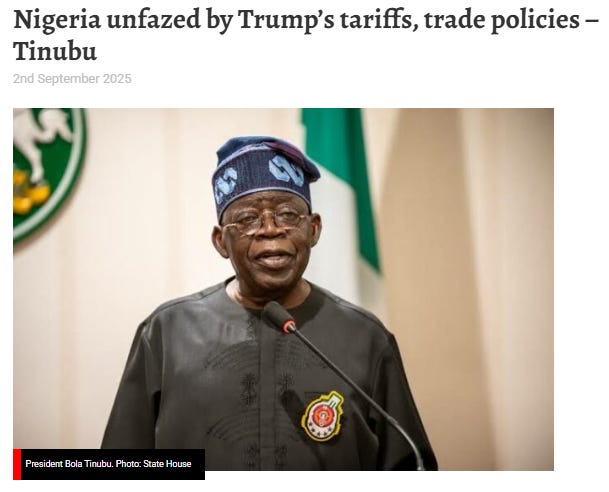
Cancellation of visas issued to Nigerians intending to visit the United States did not move the needle. So, the Orange Strongman threatened to raise US tariff rates beyond the current 15% imposed on 2 April 2025.
The Nigerian government remained steadfast in its refusal to accept any migrant deportees.
During a Nigerian TV interview, Foreign Affairs Minister Yusuf Tugga stated that the vast multiethnic federation already had 230 million citizens and was not keen on adding 300 Venezuelans deported from US Prisons to the Nigerian population.
In the brief video excerpt from the interview, the Foreign Minister even referenced Flavor Flav from the US hip-hop group Public Enemy to illustrate Nigeria’s rejection of Trump’s request :
After threats failed to change Nigeria’s position, President Trump started exploring other options in Africa for his deportees.
It didn’t take long for him to secure agreements with five African countries eager to do whatever the Trump Administration wanted in the hope of securing trade deals or cash payment from the United States.
The countries that agreed to the serve as dumping ground for Trump’s deportees are: Rwanda, Uganda, Ghana, South Sudan and Swaziland. The first two countries on the list already have a history of accepting unwanted foreigners being removed from the United States.
[a] Rwanda
Despite its poverty, post-genocide Rwanda is one of the best run countries on the continent of Africa. Corruption is extremely low; the local police force is professional; there is a national health insurance scheme; and the cities and towns are kept clean.
The Rwandan Defence Forces (RDF) is arguably the most battle-hardened fighting force on the African continent. The deployment of Rwandan expeditionary troops to Portuguese-speaking Mozambique has had the immediate effect of turning the tide against an Islamist insurgency raging in Carbo Delgado Province, where Mozambique’s natural gas fields are located.
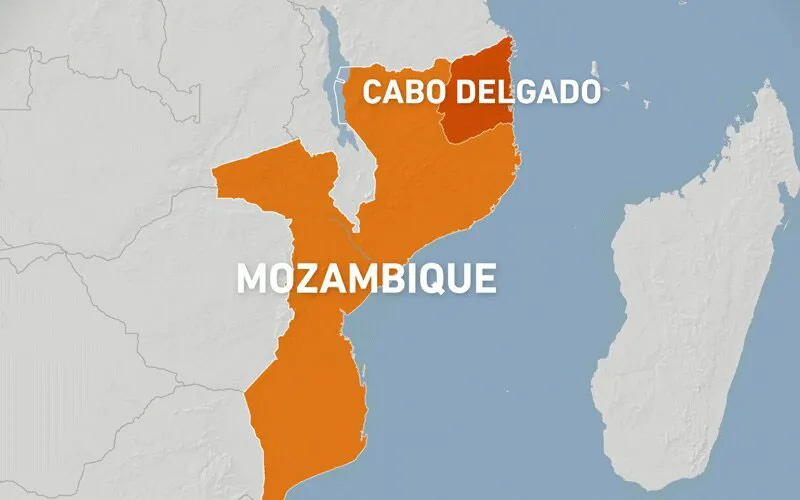
As a result of the activities of ISIS-linked jihadists, construction work on some of the Liquefied Natural Gas (LNG) facilities had to be suspended. After the Mozambican Armed Forces folded like a lawn chair in the face of Islamist firepower, the government of Mozambique sought external help.
A series of European and white South African mercenary groups were hired, but the Islamist rebels kept advancing until Rwandan expeditionary troops were deployed. Under Rwandan firepower, the Mozambican jihadi rebels began to retreat, much to the joy of the locals and the embarassment of the Mozambican armed forces.
RDF miliary successes stems from the fact that many of its retired and serving personnel had gained experience fighting in several wars, including the Mozambican War of Independence (1964-1974), Uganda-Tanzania War (1978-1979), Ugandan Bush War (1980-1986), Rwandan Civil War (1990-1994), First Congo War (1996–1997), Second Congo War (1998-2003) and the Eastern Congo offensive (2009).
Many senior officers in the Rwandan Defence Force (RDF) had grown up in the refugee camps of neighbouring Uganda following the flight of their parents to escape the massacre of Tutsis during the Rwandan Revolution (1959-1961) that presaged the creation of the Rwandan republic.
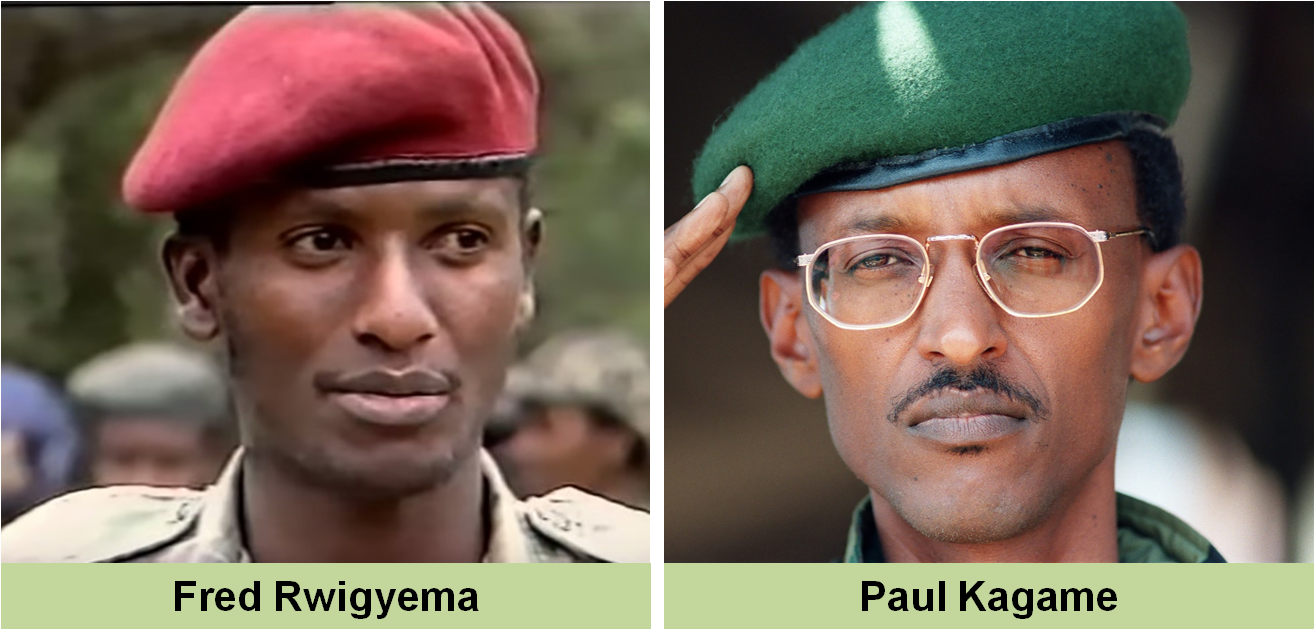
Like many male Tutsi refugees living in Uganda, Paul Kagame and his close friend, Fred Rwigyema, ended up fighting in Uganda’s wars. Rwigyema had prior experience fighting Portuguese colonial soldiers in Mozambique before he intervened in Uganda’s wars.
Despite their foreign origins, both Tutsis rose to become senior officers in Uganda’s armed forces. For a time, Paul Kagame was the director of Ugandan Military Intelligence while the now deceased Fred Rwigyema was Uganda’s Deputy Defence Minister.
Both men would later be subject to xenophobic attacks by native Ugandans opposed to Rwandan foreigners occupying senior positions in their country’s armed forces.
Longing to return to their home country, Rwanda, thousands of these exiled former child Tutsi refugees— including Fred and Paul—would desert their positions in the Ugandan military in 1990 and cross the international border, triggering the Rwandan Civil War. That war would ultimately result in the 1994 genocide of thousands of Tutsis still living as second-class citizens within the borders of what was then a Hutu-ruled country.
After the defeat and overthrow of the genocidal Hutu regime by Tutsi-dominated rebel forces (now known as the RDF), a new post-war government rebuilt resource-poor Rwanda from scratch with donor aid packages and revenue from lucrative trade deals with the United States. Hence, Rwanda’s strong alliance with successive US Administrations.
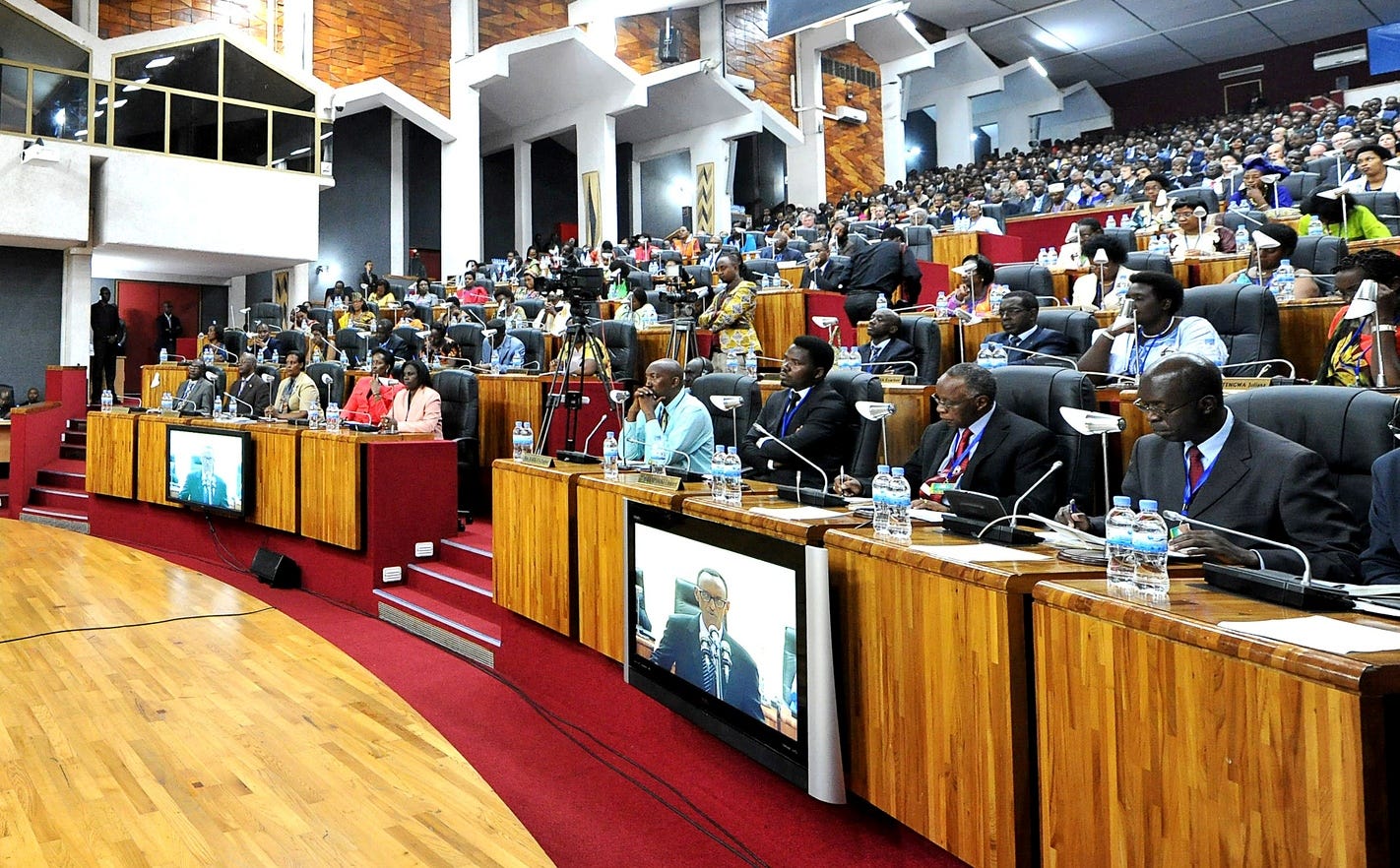
Rwanda has been criticized for its never-ending military interventions in the Democratic Republic of Congo (D.R.C), where it stands credibly accused of stealing gold, diamonds, cassiterite, coltan, and timber. However, these ill-gotten gains from diamond sales have mostly ended up enriching the national treasury of the Rwandan state (as opposed to ending up solely in private bank accounts).
The revenue earned from illegal exploitation of Congolese resources allowed resource-poor Rwanda to fund its infrastructural development and build a national health insurance scheme that does not exist in wealthier African countries, including the D.R.C.
Contrary to what many uninformed outsiders say, Rwanda has compelling reasons for intervening in the D.R.C as I explained in a previous article:
Historically, the eastern region of the D.R.C has never been under the full control of the Congolese national state.
The region has always been an anarchic zone, crawling with various irregular military formations. These range from several home-grown Congolese rebel groups to exiled foreign rebel groups, such as the Lord’s Resistance Army kicked out of its native Uganda, and the Democratic Forces for the Liberation of Rwanda, which is actually an amalgamation of the exiled military forces of the overthrown Rwandan Hutu government and the Interhamwe Militia fighters, who spearheaded the 1994 Rwandan genocide.
From rear bases in Eastern Congo, these foreign rebel groups launch cross-border raids into their native countries. For that reason, Ugandan and Rwandan troops regularly violate the sovereignty of the D.R.C by entering Eastern Congo without permission to fight those cross-border rebel groups.
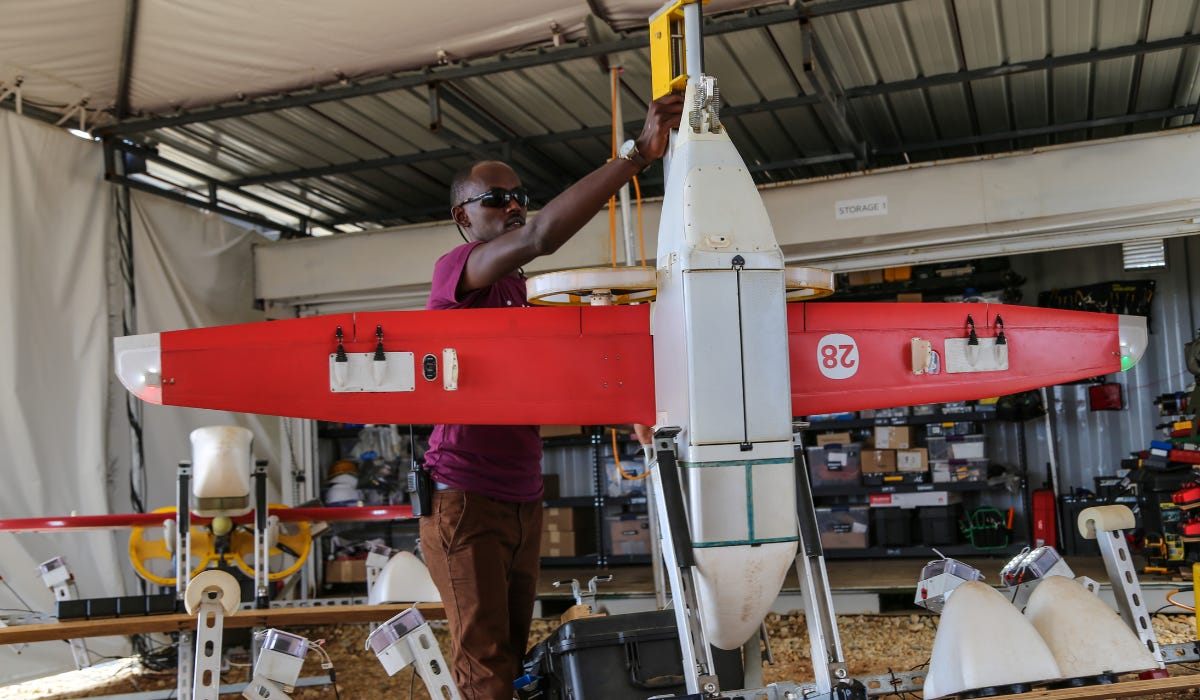
As already explained, resource-poor Rwanda needs all the revenue it can get. Therefore, it is not hard to imagine the Trump Administration making promises of greater trade access, and perhaps quietly lifting the 10% tariff slapped on Rwandan exports to the United States.
Rwanda has prior experience on the subject of accepting foreigners from third countries. Between 2021 and 2023, Rwanda absorbed 250 Afghan students, including more than 40 girls, and provided facilities for them to continue their education. The refugees were accepted at request of the Biden Administration.
Rwanda signed an agreement with the Tory government of Boris Johnson to accept illegal migrants from the United Kingdom for a “small fee” of £300 million per annum.
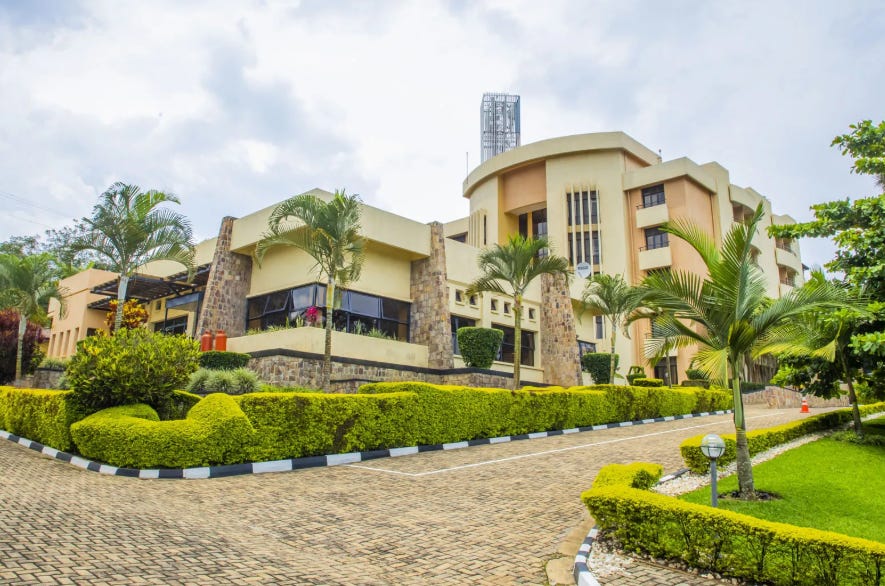
Rwanda offered Hope Hostel in Kigali as potential accomodation for the migrants arriving from the UK. The massive building complex was originally built to shelter Tutsi students who had been orphaned during the Rwandan genocide of 1994.
However, for millions of pounds sterling from the British government, the Rwandan state was willing to offer the massive hostel to illegal migrants from the UK.
The hostel is set inside a large compound that boasts of a football pitch and a basketball court. Potential hostel residents would have cooks and cleaners at their service.
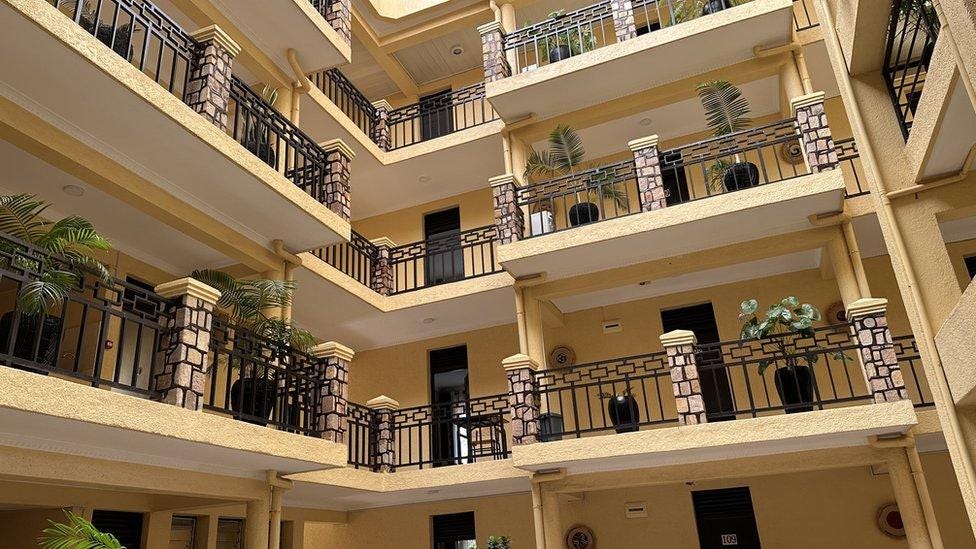
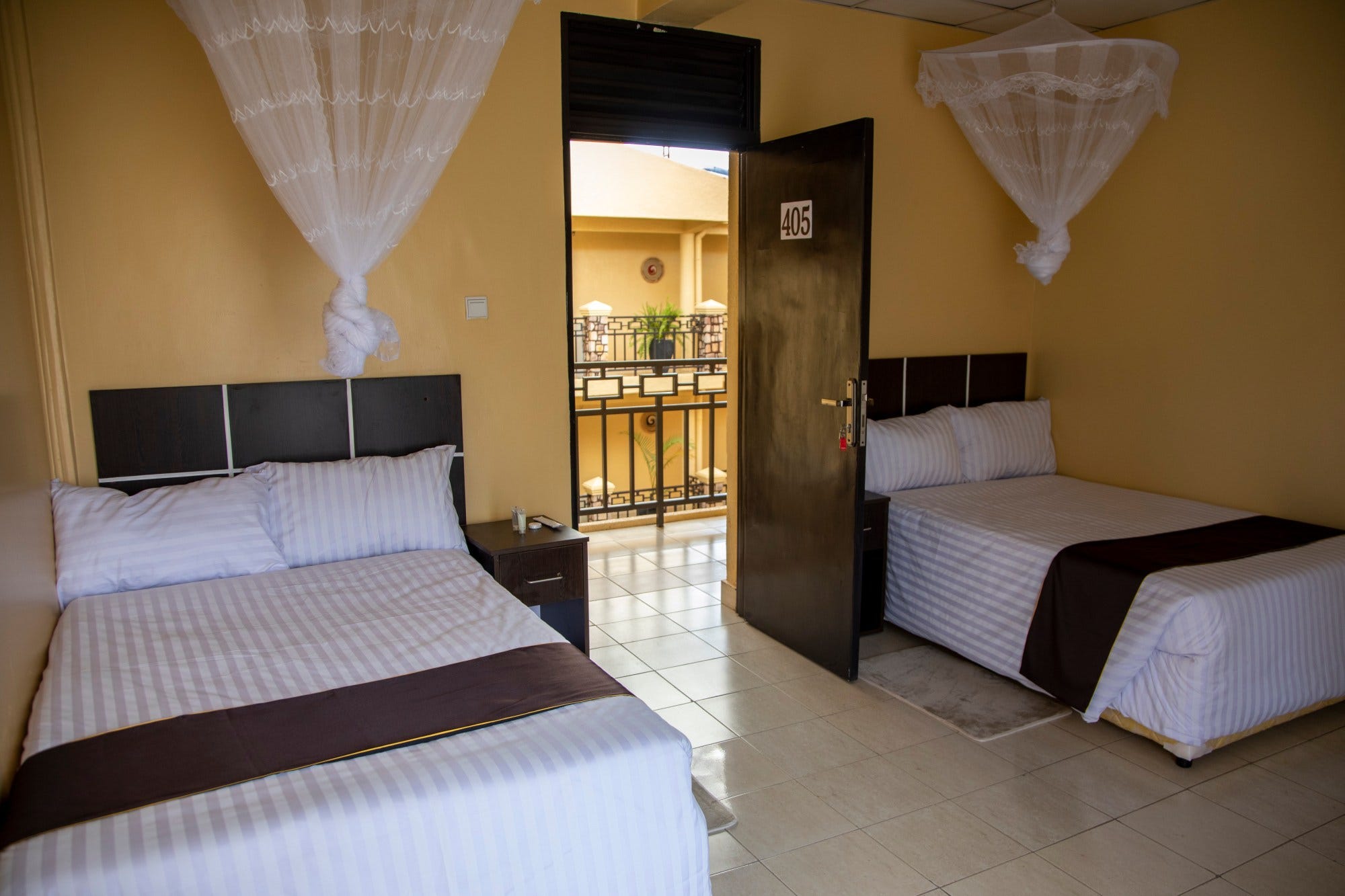
Unfortunately, the Tory governments of Boris Johnson and Rishi Sunak were unable to deport any illegal migrant to the African continent because human right groups had gone to British courts to obtain injunctions against the “inhumane” relocation of migrants to Rwanda.
The hot dispute over whether migrants should stay in Britain or be deported to Rwanda was resolved by the 2024 UK general elections, which Keir Starmer and his Labour Party won. The new Labour government wasted no time in cancelling the migrant resettlement plan. Human rights activists heaved a collective sigh of relief — the migrants were now safe from being sent to the Dark Continent.
Of course, I completely understand that the word “Africa” evokes fear, desolation, starvation, images of scantily dressed black people living in mud huts, dancing with spears, and playing “hide-and-seek” with lions, leopards, elephants and other wild animals in dense jungles.
However, foreign tourists who have been to post-genocide Rwanda would not fail to notice how modern its cities and suburban towns look. The capital city of Kigali has skyscrapers, high-rise buildings, excellent roads, a disciplined police force, hospitals, a working telephone system, electricity, and streets that are kept pristine. Plastic bags are banned in Rwanda. The country has eighteen universities and high-speed internet.
The funny thing is that illegal migrants in UK, who are terrified of being sent to Rwanda, would have enjoyed better living conditions in the African country compared to their uncomfortable existence in crappy one-star British hotels, besieged daily by angry anti-immigration protesters.
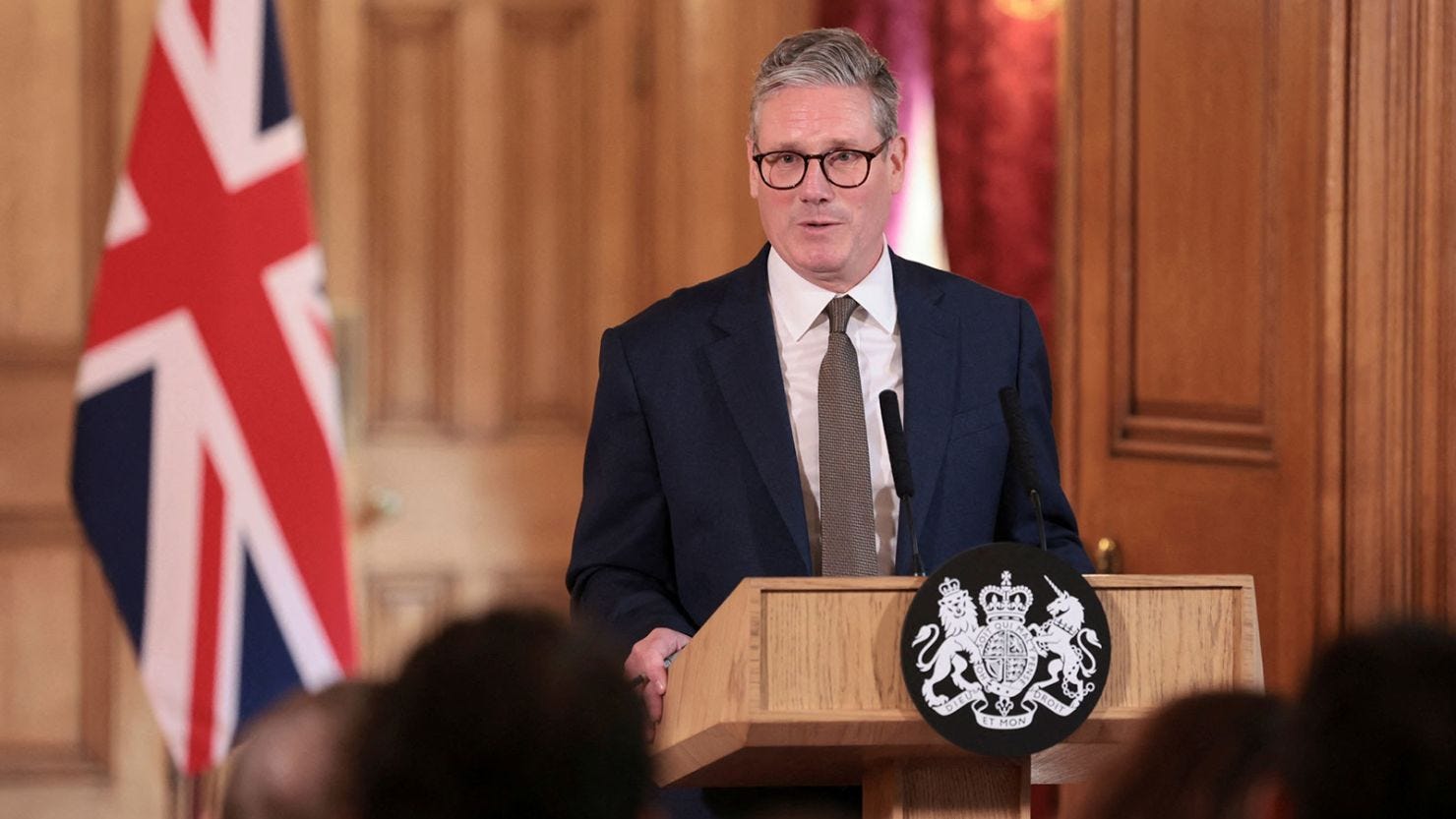
Rwanda shrugged off the cancellation of the migrant resettlement plan. The UK had already been paid £240 million to the East African country before the plug was pulled. For avoidance of doubt, Rwandan government stated that it would not return any part of the payment. The African country need not have bothered because the bumbling British Prime Minister Keir Starmer never asked for a refund.
Rwanda had just put the matter of receiving illegal migrants from wealthy, first world nations behind it when Donald Trump came knocking with his own proposal.
The terms of the deal that Rwanda struck with the Trump Administration has been kept secret. The only thing in the public domain is that Rwanda has pledged to accept 250 illegal migrants deported from the United States. The Rwandan government has stated that it would provide the deportees with “workforce training” and free health care.
I doubt Rwanda would have agreed to provided such services for free. Most likely, Rwanda is receiving cash payments from the Trump Administration or has been promised lucrative trade concessions in exchange for taking the deportees.
[b] Uganda
Uganda is another country experienced in accepting foreigners unwanted by the US government. In August 2021, Uganda accepted 2000 Afghan refugees at the request of the Biden Administration.
President Biden had authorized the resettlement of thousands of Afghans in the United States. However, under domestic fire from rightwing critics, he off-loaded some of them to third countries like Uganda and Rwanda.
Trump’s deportees in Uganda will not see anything that comes close to approximating the beauty of neighbouring Rwanda.
Uganda’s economy is much larger than that of Rwanda. Rwanda has few resources while Uganda possess a large agricultural sector and the recently discovered petroleum reserves.
Nonetheless, Ugandan cities and towns are quite decrepit compared to their counterparts in post-genocide Rwanda. In fact, large swathes of Northern Uganda conform to those stereotypical African images that Europeans and North Americans often see on their televisions.
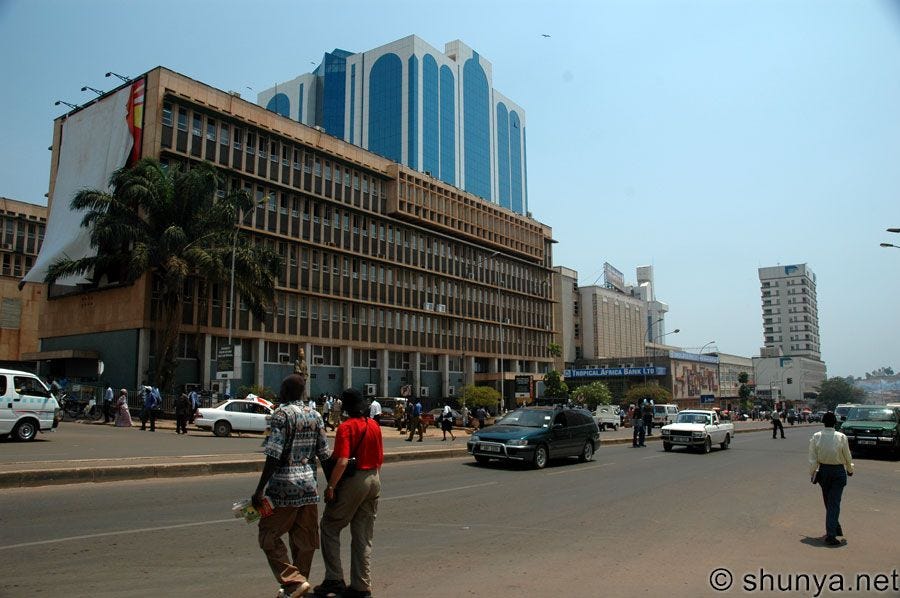
Corruption in Uganda is of the standard found all over the continent. Ugandan police officers demonstrate a readiness to accept bribes just like their counterparts elsewhere in Africa.
When comparing the adjacent countries of Uganda and Rwanda, I am often struck by a tragic story I read many years ago in the privately owned Ugandan newspaper, The Daily Monitor, which is often critical of official corruption in the Ugandan government.
The Daily Monitor reported a bus accident that occurred near the Uganda-Rwanda Border. The bus passengers were a blend of Ugandan and Rwandan traders travelling together from Rwanda to Uganda. However, they never made it across the border. The bus crashed on the Rwandan side of the border.
Injured Rwandan passengers quickly used their phones to send a text message to an emergency number linked to their country’s national health insurance scheme. Within 30 minutes, hospital ambulances and RDF military helicopters arrived to evacuate all Rwandan Identity Card holders to Rwandan hospitals. The most severely injured Rwandans were flown to better equipped South African hospitals.
Appallingly, the injured Ugandans were left behind at the scene of the accident to fend for themselves.
The wounded Ugandans had no national health emergency number to call or send a text message to. So, they were forced to spend a few hours on the side of the road, desperately attempting to flag down passing private vehicles.
Eventually, a couple of private vehicles stopped, for humanitarian reasons, to transport the injured traders across the border to hospitals in Western Uganda.
This particular story caused widespread outrage in Uganda, not just for the appalling behaviour of the Rwandans, but for the fact that Uganda did not have an equivalent National Health Insurance Scheme, despite being wealthier than Rwanda.
Many Ugandans also felt a sense of ingratitude, considering that several high-ranking Rwandan government officials had previously been child refugees who lived and benefitted from the generosity of the Ugandan people.
Ugandans still recall that Rwandan President Paul Kagame was once a senior military officer serving at the pleasure of Ugandan President Yoweri Museveni.
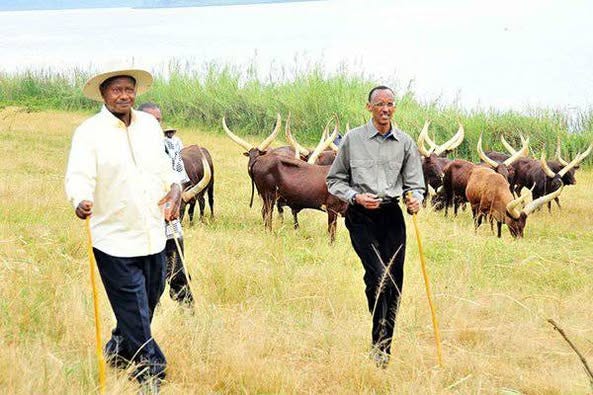
Yoweri Museveni has been the national leader of Uganda for almost four decades. In all that time, he had been a wily political operator able to sense the way the geopolitical wind is blowing, and make appropriate adjustments.
During the roaring 1960s, he was a student at the University of Dar es Salaam. At that moment in history, the university, located in neighbouring Tanzania, was a hotbed of radical Marxism. Karl Marx’s Das Kapital was recommended reading on campus. Franz Fanon’s theory of violence was an accepted creed. The students there absolutely loved Mao Zedong and fervently believed in Zhao Enlai’s statement that “Africa was ripe for a revolution”.
Marxist professors from all over the world popped in and out of Tanzania, stopping by the University of Dar es Salaam to deliver fiery lectures to the students.
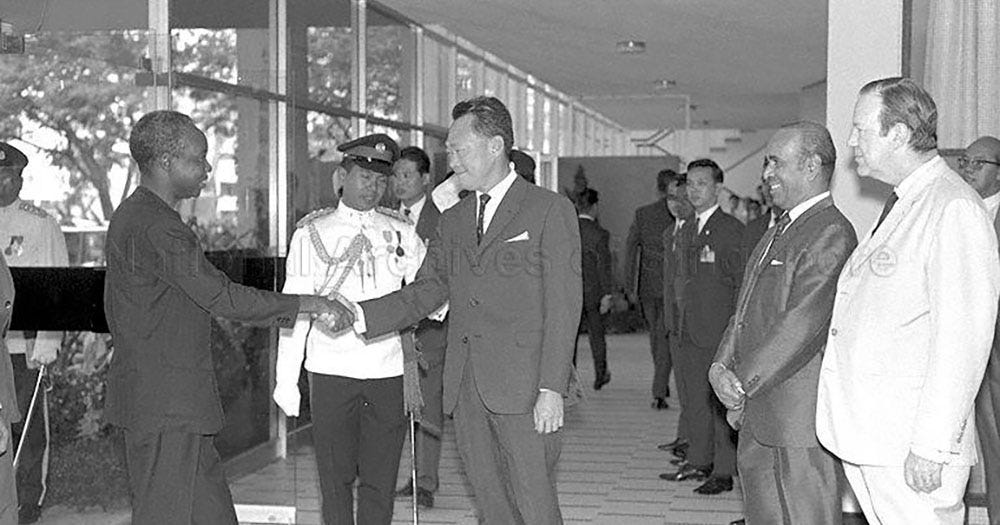
While the Afro-Socialist government of Tanzania expressed concerns about Marxist radicalism on the university campus, it nevertheless tolerated the ideology as long as the radicals advocated for the liberation of Portuguese-held African colonies and the overthrow of the white settler minority regimes in Rhodesia and apartheid South Africa.
For a period, radical Black Panther Party activists from United States resided in Tanzania. However, their doctrinaire Marxist-Leninist views, coupled with anti-white racism, eventually clashed with the more moderate, heterodox Afro-Socialist views of Julius Nyerere, the devout Roman Catholic President of Tanzania.
Afro-Socialism was a blend of Fabian Socialism, traditional African communalism, state control of major industries, self-reliance verging on complete autarky, and a degree of land collectivization. (However, it has to be said that Tanzania’s own version of Afro-Socialism went for full-scale land collectivization with disastrous consequences.)
Doctrinaire Marxist-Leninists treated Afro-Socialism with contempt because of its rejection of class struggle, revolution, and atheism. Afro-Socialism also preached non-alignment with the competing forces of the Warsaw Treaty Organisation and the North Atlantic Treaty Organization (NATO).
In accordance with his political beliefs, the soft-spoken Julius Nyerere maintained friendly relations with both Soviet-led Eastern Bloc countries and US-led NATO states. Under Nyerere, Tanzania also enjoyed excellent ties with fellow Commonwealth countries, which included the same United Kingdom, whose colonial rule he had opposed vigorously as a young man.
The last straw that led to the mass expulsion of the Black Panther activists from Tanzania was their demand that Nyerere publicly back the creation of a “blacks-only” nation on the territory of the United States.
President Nyerere told the Black Panthers that he had dedicated his entire life to combating racism and that he would never endorse the idea of a “black apartheid state”. The disappointed Black American radicals denounced the Tanzanian leader as a “sell-out”. Shortly after, the radicals were rounded up and forcibly expelled from the East African country.
The radical atmosphere inside the University of Dar es Salaam shaped a young Yoweri Museveni. By the 1970s, he was the leader of a small Marxist guerrilla force of Ugandan exiles based in Tanzania.
The guerrillas carried out cross-border assaults into Uganda with the objective of toppling the cruel military dictatorship of Idi Amin.
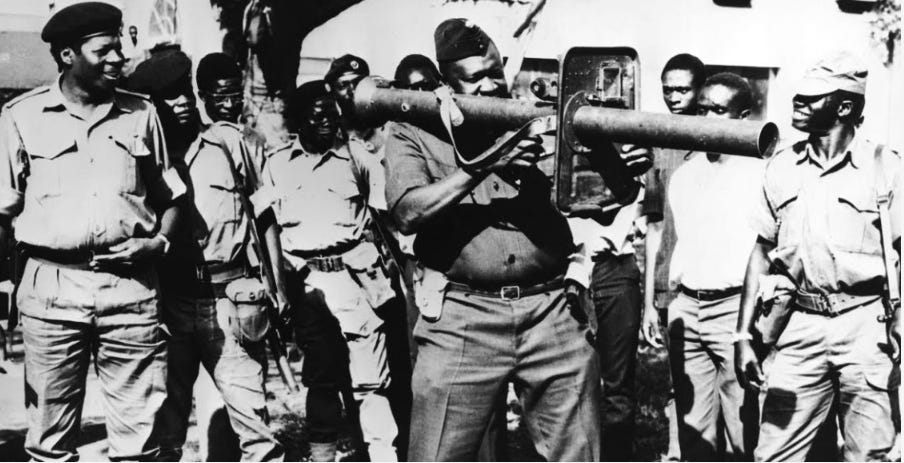
During that period, Amin cynically portrayed himself as an “anti-imperialist” as he embezzled government funds and eliminated political adversaries, and critical religious leaders (e.g. Archbishop Janani Luwum). He also carried out massacres of specific ethnic groups he viewed as challenging his authority.
Idi Amin’s catastrophic decision to invade and occupy Tanzania’s Kagera Region was the trigger for the Uganda-Tanzania War (1978-1979), and his subsequent downfall. Idi Amin’s army, Libyan expeditionary troops and Palestinian irregulars all proved to be no match for the immense firepower of the invading Tanzania People’s Defence Force (TPDF).
Museveni’s guerrilla band joined the loose coalition of armed Ugandan exiles that rode the coattails of the Tanzanian army’s mechanized advance towards the Ugandan city of Kampala.
Before Tanzanian trucks transporting BM-2 Grad Multiple Rocket Launchers arrived in Kampala, Idi Amin had already fled the country. With his army disintegrating, and his Palestinian and Libyan allies deserting him, he had no option but to leave.
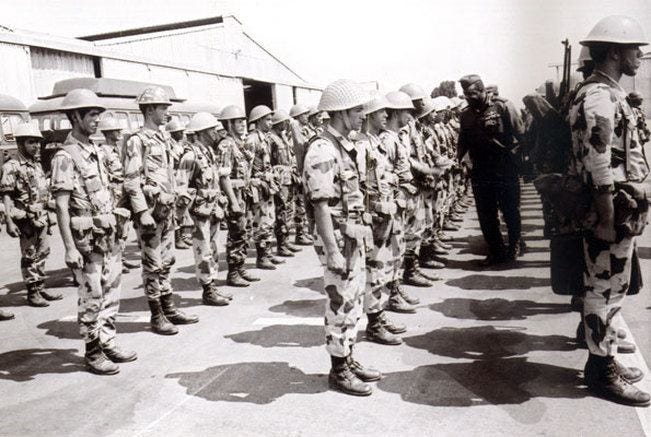
Once the war was over, the coalition of former Ugandan exiles organized Presidential elections in December 1980, which was officially “won” by Milton Obote, the national leader of Uganda from April 1962 until his January 1971 overthrow by General Idi Amin.
The announcement that Milton Obote was returning to office as Uganda’s President was met with uproar. Obote’s political rivals, including Yoweri Museveni, denounced the 1980 Presidential Election as fraudulent.
Ordinary Ugandans were dismayed. Milton Obote had never been popular. In fact, thousands of Ugandans had gathered at the national stadium to celebrate his overthrow in 1971. That was, until they realized Idi Amin was several orders of magnitude more repressive than the toppled Milton Obote.
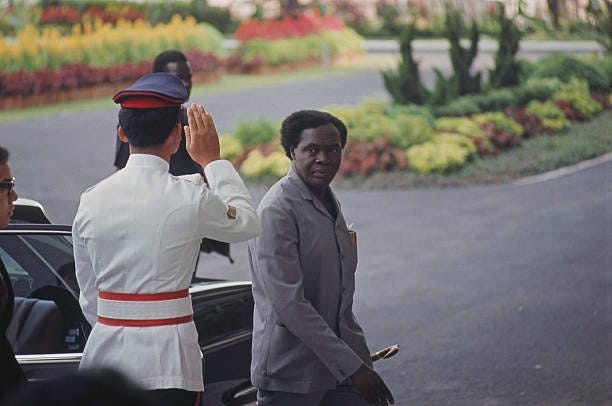
Milton Obote began his second presidency in December 1980 with a crackdown on the political opposition. Many of Obote’s political rivals went into hiding or fled Uganda outright.
Once safely out of reach of Obote’s security services, those political opponents began to organise an armed insurgency. A civil war known as the Ugandan Bush War (1980-1986) soon followed.
Out of multiple rebel groups fighting Obote’s military forces, Yoweri Museveni’s National Resistance Army (NRA) emerged as the best organized and most disciplined.
Between 100,000 and 500,000 people died during the six years of war between the government-run Uganda National Liberation Army (UNLA) and various rebel groups, including Museveni’s NRA. Many of the deaths were attributed directly to the atrocities committed against civilians by the UNLA.
Despite assistance from Tanzanian, American, North Korean and British military advisers, President Milton Obote and his UNLA forces kept losing territory to NRA rebels led by Yoweri Museveni.
In July 1985, Milton Obote was overthrown for the second time by General Titus Okello and Brigadier Bazilio Olara-Okello, who were not related despite sharing the same surname.
The two senior officers of the UNLA formed a military junta and managed to sign peace agreements with a myriad of small rebel groups. However, the military junta was unable to persuade Museveni’s much larger NRA rebel force to stop fighting.
With the dissolution of the Obote government, Tanzania shifted its material backing from UNLA goverment forces to the winning NRA rebels. Libya came off the sidelines and joined Tanzania in shipping weapons to NRA rebels, even though Museveni and Gaddafi had been adversaries during the earlier Uganda-Tanzania War.
By December 1985, large swathes of southern and western parts of Uganda were under Museveni’s control.
Retreating UNLA forces were in disarray, plagued by lack of discipline and low morale. UNLA also faced hostility from the local population in all parts of Uganda, except in the North, where most UNLA soldiers originated.
Despite the common Northern origins of UNLA troops, there were significant tensions between soldiers from Milton Obote’s Lango ethnic group and those from the much larger Acholi ethnic group.
When NRA rebels began their advance on Kampala, the bulk of the UNLA government force disintegrated into marauding gangs.
On 26 January 1986, the Okello military junta collapsed when its chief executive, General Titus Okello, fled by helicopter to neighbouring Sudan.
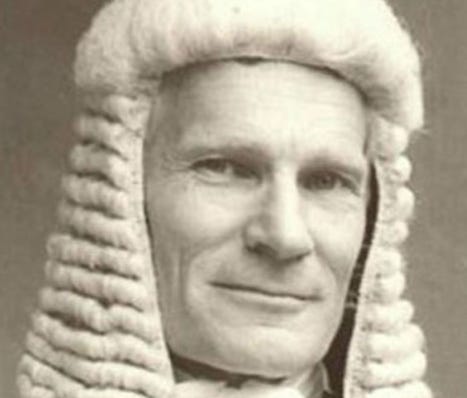
In the absence of any form of national government, British-born Chief Judge Peter Allen assumed power as the interim President of Uganda. He served in that role for four days as heavy fighting raged between NRA rebels trying to seize control of Kampala from disorganized remnants of the UNLA force.
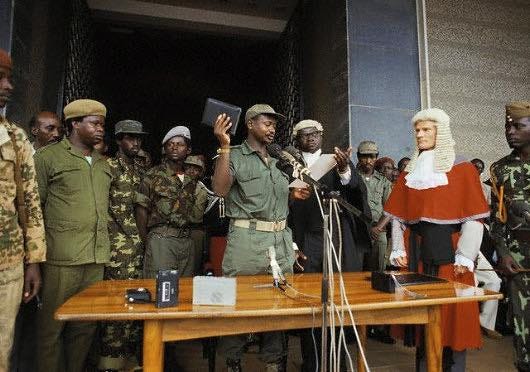
Eventually, NRA rebels captured the capital city and Peter Allen reverted to his role as the Chief Judge of Uganda. He swore in NRA rebel leader Yoweri Museveni as the new Ugandan Head of State, and retired shortly after that.
The Ugandan Bush War officially came to an end in March 1986 when UNLA ceased to exist altogether. Nevertheless, low-intensity conflict persisted in Northern Uganda, with the NRA clashing against various armed factions opposed to Museveni’s rise to power. These groups included former UNLA soldiers and individuals who had previously served in Idi Amin’s defunct army.
With Museveni as Head of State, the National Resistance Army (NRA) transitioned from a rebel group to the official military force of Uganda.
This was an era when 150,000 Rwandan Tutsi refugees lived in Uganda as a result of the bloody Rwandan Revolution (1959-1961). In retaliation for the xenophobic policies of the Obote government, a significant number of those refugees had joined the NRA during the Ugandan Bush War.
By the official end of the war in March 1986, many of those armed refugees had risen to become mid-level and senior military officers within the NRA.
Four years later, in October 1990, those refugees-turned-soldiers deserted their positions in the NRA and illegally crossed the border into French-speaking Rwanda, triggering the Rwandan Civil War that culminated in the 1994 genocide.
Yoweri Museveni would have loved to align his Ugandan government with Eastern Bloc countries. However, he came to power at a time when the Soviet leader Mikhail Gorbachev was gradually disentagling the USSR from the affairs of its East European client states in a desperate attempt to curry favour with skeptical United States and West European countries.
Gorbachev’s Perestoika and Glasnost political reforms left little room for wasteful funding of far-flung African governments professing the Marxist ideology. Communist East European countries were financially bankrupt, and poverty-ridden China was busy undergoing Deng Xiaoping’s economic reforms.
Therefore, Yoweri Museveni had no choice than to turn to the tried and tested African ideology known as Pragmatism.
Although, the United States had backed the defunct Obote government, Yoweri Museveni began to court the Americans. He badly needed money to rebuild the shattered Ugandan state. He also reached out to the British.
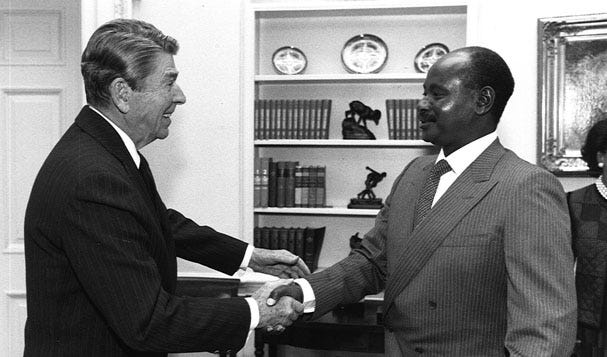
The Americans and the British agreed to help, which, of course, meant accepting the standard IMF economic package— government control of companies and state subsidies would have to be ditched.
Museveni swallowed his pride and his political ideology, and implemented the painful IMF reforms. The economy of Uganda unexpectedly bounced back, and Museveni officially renounced his previous Marxist beliefs.
He became a fervent neoliberal, accepting that privatization, deregulation and liberalization of the economy was the right way to go. All Ugandan government-owned companies were either sold off to private business or dissolved outright.
The US government and its mainstream media toadies declared Uganda a success story. When HIV/AIDS emerged as serious problem in the Eastern and Southern subregions of Africa, Uganda became a trailblazer in bringing the deadly disease under control with heavy funding from USA and Europe.
At the request of successive US Administrations, Museveni funnelled weapons to Christian rebels of South Sudan then fighting the Islamist national government of Sudan.
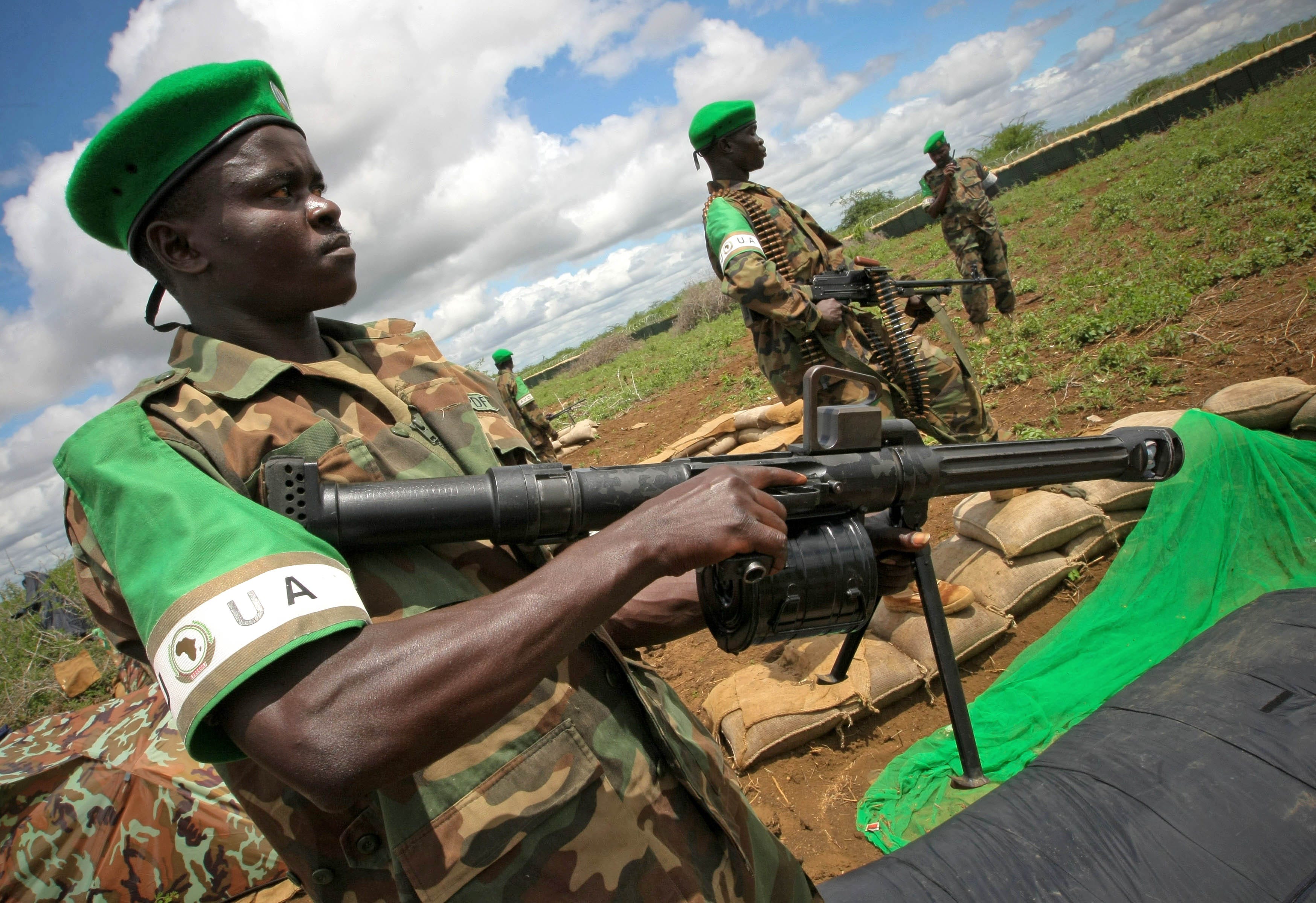
Following the adoption of a new Ugandan constitution in October 1995, the National Resistance Army (NRA) was reorganized into the Ugandan People’s Defence Force (UPDF). The new constitution lifted the January 1986 ban on political parties. Political parties were free again to exist legally and prepare for new presidential elections.
The first ever presidential elections under Museveni’s rule was held in May 1996. Museveni won by 75.5% of the votes, which was declared free and fair by both international and domestic election observers. Not a surprise, given that rival presidential candidates were all political lightweights.
Museveni’s love affair with the United States and its European allies continued after the first multi-party election that legitimized his rule. Lots of European and North American donor funds poured into Uganda.
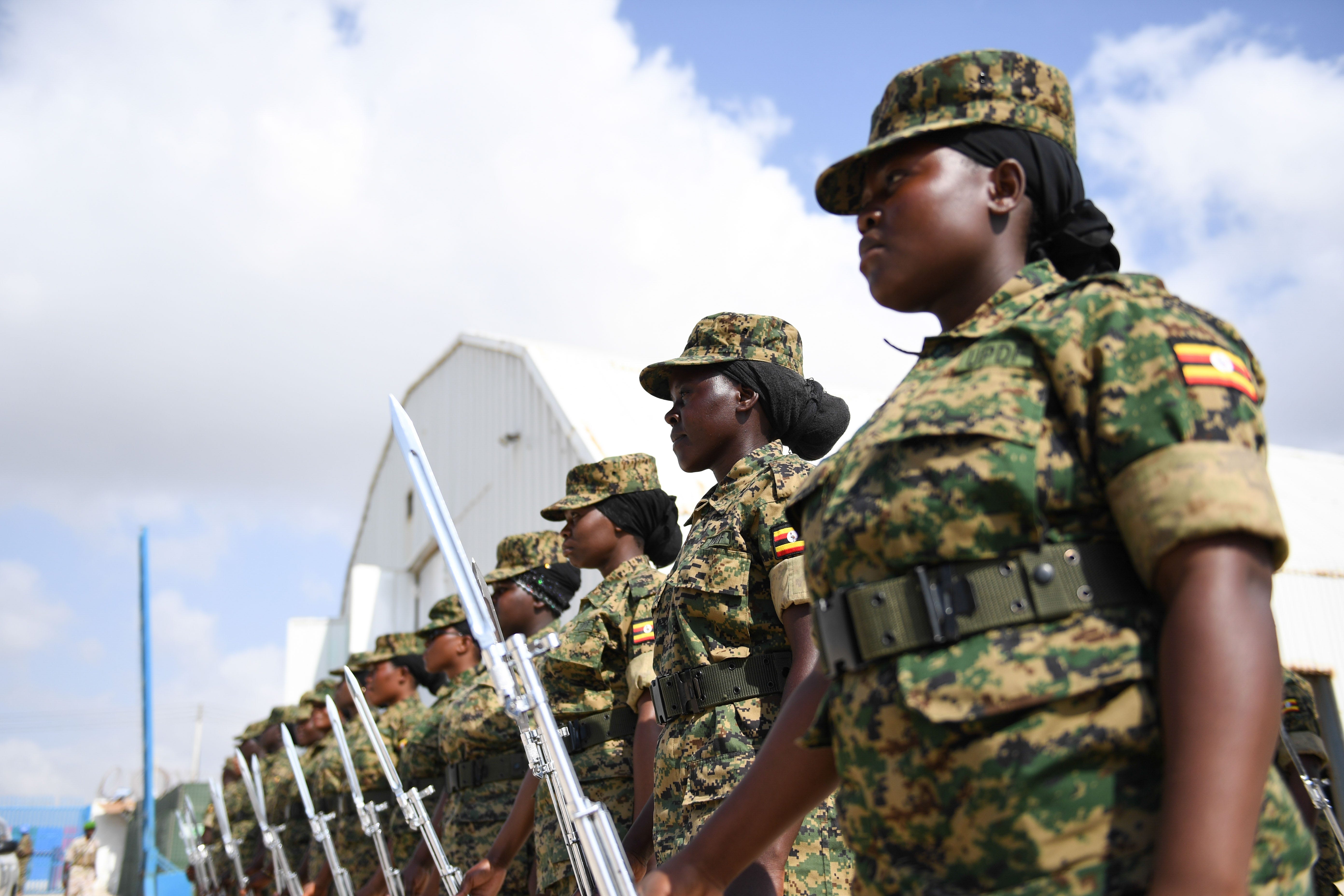
In 2012, Obama Administration called various African governments to request military troops to fight an American proxy war in Somalia.
Since 2010, a token contingent of 200 Nigerian police officers has been serving under the auspice of the African Union Mission to Somalia (AMISOM). The Nigerian government was satisfied with that modest contribution to the Somalian peacekeeping mission. Therefore, Obama’s proposal that Nigeria deploy actual military troops for a hot conflict with Somalian jihadi groups was rejected.
By contrast, Uganda, Ethiopia, Burundi and Kenya were receptive to Obama’s request for extra troops to be committed to the fight in Somalia.
Museveni sent extra Ugandan troops to Somalia to fight Somali Islamist fighters. He wasn’t doing it solely to please President Obama.
Two years earlier, Somali terrorists— in collaboration with homegrown Ugandan Islamists—had detonated bombs in a restaurant and a rugby clubhouse crowded with football fans watching the 2010 World Cup final match between the Netherlands and Spain. A total of 76 Ugandans were killed in both bombings, which occurred simultaneously.
The Al-Shabaab terror group in Somalia cited the presence of Ugandan troops in AMISOM since March 2007 as the reason for detonating the bombs.
The 2010 terror bombings played a role in Museveni’s decision to accept Obama’s 2012 request to deploy additional troops to strengthen the existing Ugandan military contingent in Somalia.
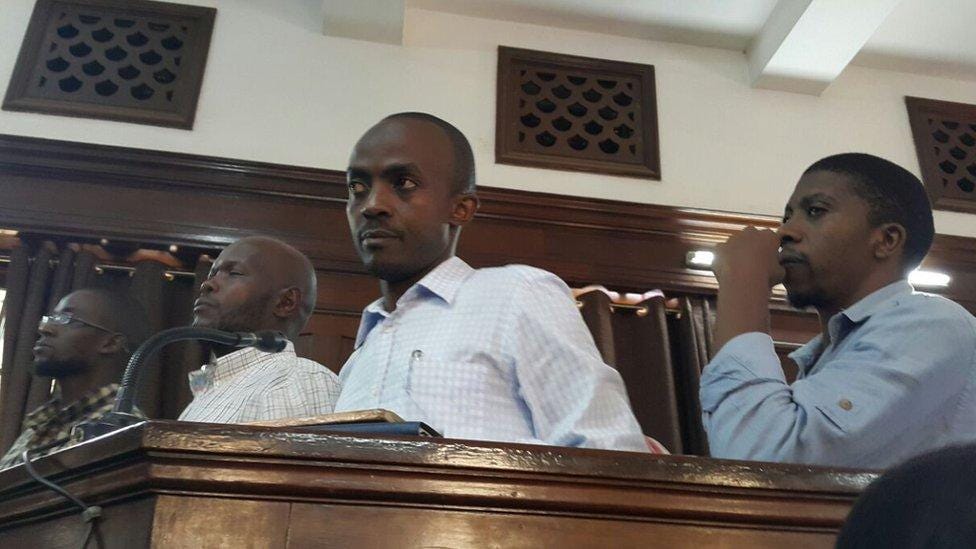
The ruination of Museveni’s relationship with Western countries was a product of the internal politics of his country. Since October 2009, the Parliament of Uganda had been trying to pass a new sex crime law, which upset the governments of Western countries.
While officially going along with the proposed parliamentary bill that was wildly popular across Uganda, Museveni worked behind the scenes to ensure that the bill did not become law. The Americans and Europeans had been calling him with threats of donor aid cuts and denials of loans from IMF and World Bank.
For a while, Museveni was able to persuade the Speaker of the Parliament to hold off on the proposed law. However, in December 2013, Ugandan parliamentarians passed a watered-down version of the proposed sex crime bill into law.
When the Constitutional Court of Uganda annulled the enacted law on technical grounds, Museveni heaved a sigh of relief even as he continued to publicly agree with most Ugandans that “gayism was very bad for the country and un-African”.
Ugandan legislators waited patiently for the liberal Obama Administration to cease to exist before they launched a fresh attempt to get a new version of the proposed sex crimes bill enacted.
When Trump took power in January 2017, Mrs Rebecca Kadaga, the Speaker for the Parliament of Uganda predicted in a local TV interview that the Orange Strongman in the White House would not bother her country when the proposed bill was eventually enacted into law.
The third version of the proposed sex crime bill was created in 2019. In May 2021, parliament passed bill into law. By then, Trump was no longer in office.
To please the liberal Biden Administration, Museveni vetoed the sex crimes law, stating that it was unnecessary. But the Ugandan Parliament would not be deterred. A fourth version was proposed by legislators with support from all political parties.
By then, the world had changed. Russia invaded Ukraine in February 2022. Western countries imposed a plethora of sanctions on Russia, all of which failed to have any serious impact on the economy of the giant Slavic country.
To combat Euro-American mainstream media propaganda, the Kremlin sent its formidable Foreign Minister, Sergei Lavrov, on a tour of Global South countries to explain the reasons for Russia’s military action in Ukraine.
Outside of North America, Europe, Australia, New Zealand, Japan and South Korea, the rest of the world either expressed their neutrality or openly voiced support for Russia.
In Africa, countries with historic ties to the USSR expressed open suppport for Russia. Francophone countries— attempting to remove the suffocating influence of France— also backed Russia.
All Anglophone nations declared their neutrality. However, the assertion of neutrality was certainly dubious in the cases of South Africa, Namibia, and Zimbabwe. All three countries have ruling political parties with historical ties to the USSR. Each of them had behaved in a way that betrayed their sympathy for the Russian position on the Ukraine War.
Anglophone Uganda also expressed its neutrality, but saw an opportunity for a strong multi-vector foreign policy. Having observed Russia’s survival of multiple waves of sanctions dished out by the “all powerful” United States and its European allies, the Ugandan government was intrigued.
While retaining its traditional ties to the Collective West, Uganda began to move to deepen its relationship with Russia.
The first sign of the shift towards Russia was the polemical article titled “USA and Europe Have Weaponized the Dollar and World Trade”, which was published on the Uganda Media Centre (UMC) website on 29 May 2022.
The website doubles both as a semi-official platform for reporting Ugandan government media events and as a personal blog of journalist-turned-UMC director, Mr. Ofwono Opondo, who wrote the aforementioned article.
In other words, the UMC website is a perfect platform for the Ugandan government to express opinions that it does not want to voice directly.
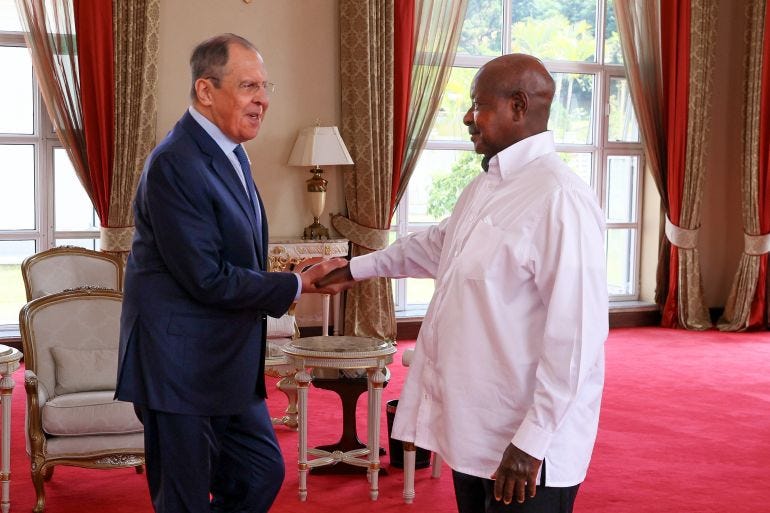
Two months, after the publication of the polemic, Lavrov began a whistle-stop trip to the continent of Africa. He visited Egypt, Ethiopia, Uganda, and the Republic of Congo (not to be confused with the Democratic Republic of Congo). Of those four countries, Uganda was the only one that had never been a staunch ally of the USSR.
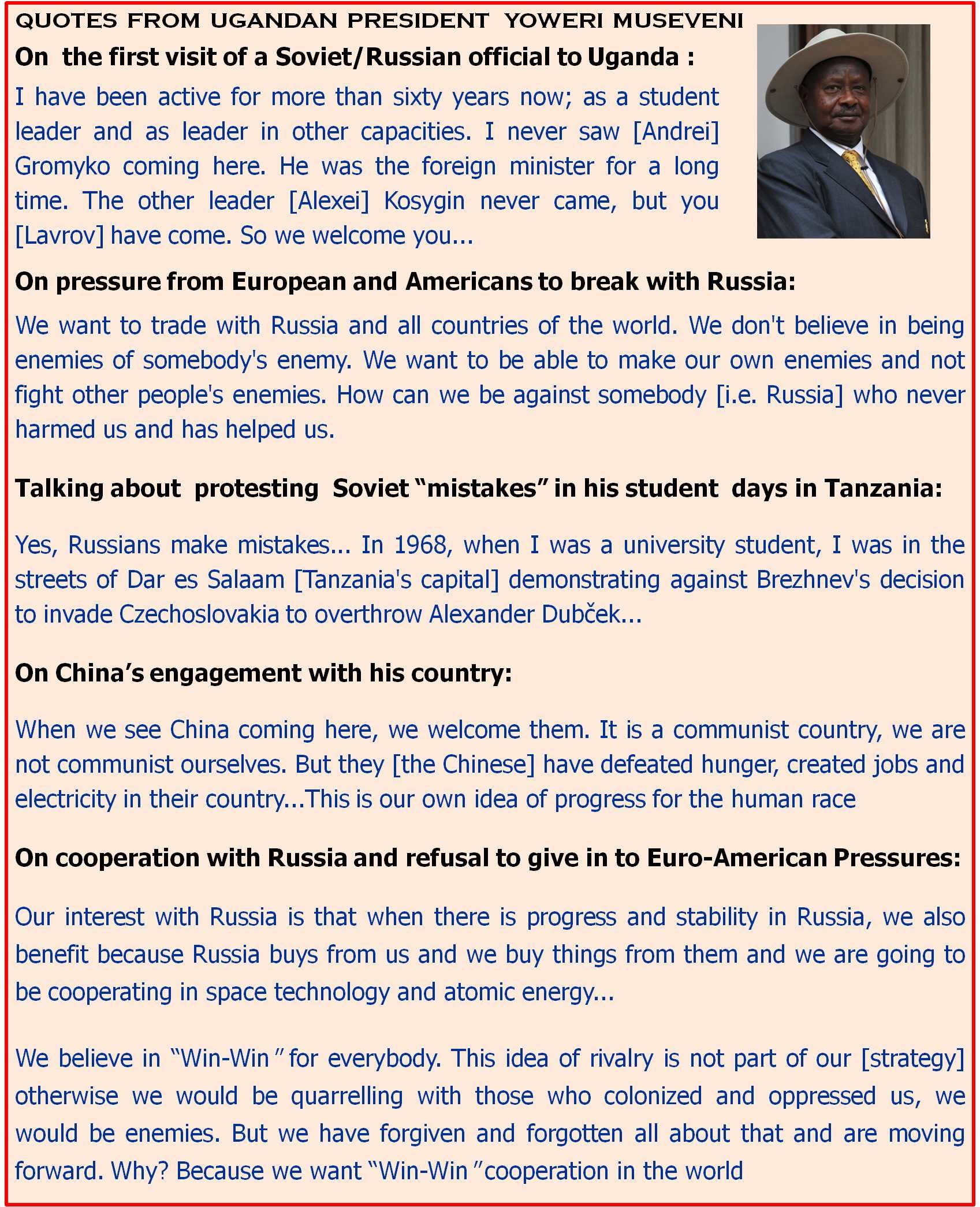
Lavrov and Museveni held a joint press conference, which was televised in real time by the Uganda Broadcasting Corporation and later published on its Youtube channel.
A few selected comments made by Museveni during the hour-long press conference with Sergei Lavrov on 26 July 2022 has been reproduced below:
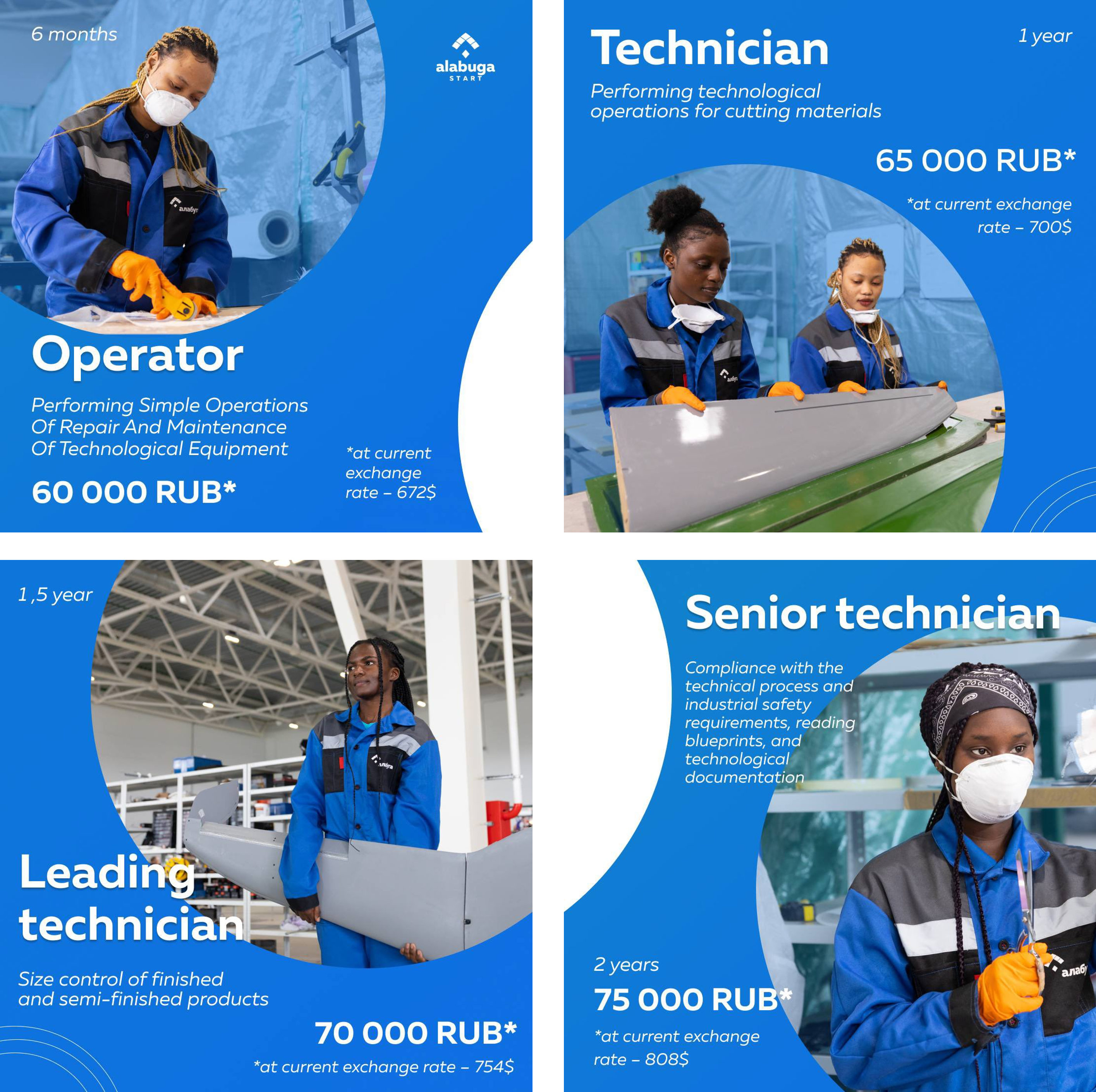
A year later, Russian recruiters began to appear in Ugandan secondary schools to recruit graduating female students who had excelled in the hard sciences. The Russians came with offers of a work-study programme, which promised the girls free accomodation, a university education, and a chance to work at the Alabuga Special Economic Zone (ASEZ).
Although they did not know it at the time, many of those girls eventually got involved in drone production once it got started in the ASEZ.
After seeing the success of the strategy, the Russians expanded the recruitment drive to other sub saharan African countries. More young African females joined the Ugandan girls already at Alabuga Polytechnic College located within the ASEZ.
According to job advertisements released by the recruiters, student workers at Alabuja were offered generous salaries nearing 1,000 dollars per month.
Inevitably, the Euro-American media propagandists began to allege that African female students in Alabuga were subject to forced labor and other forms of abuse. Soon enough, the propaganda expanded to assert that all African students in Russia were being coerced to enlist in the war effort against Ukraine.
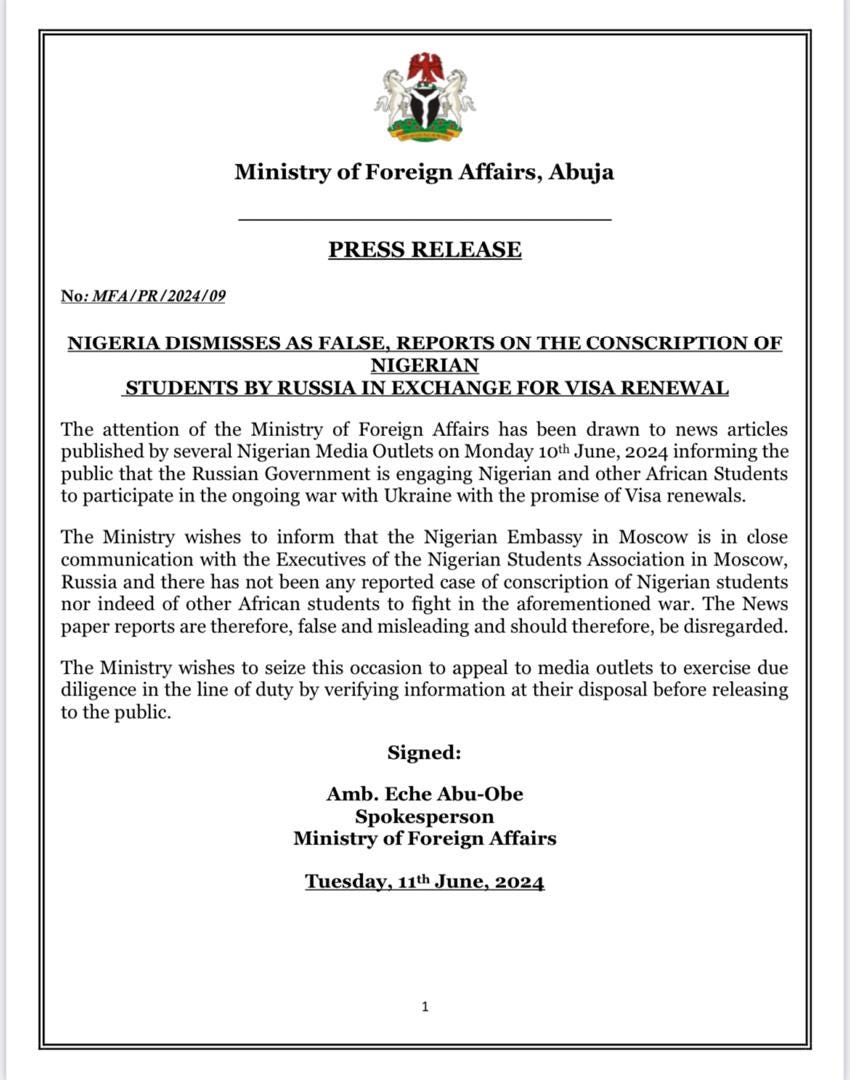
As usual, Nigeria’s local press “copied” and “pasted” these propaganda articles from Reuters, BBC and Associated Press. The Nigeria Foreign Ministry quickly published a statement denying that Nigerian students in Russia were being forced to do anything against their will.
A large delegation of Ugandan parliamentarians visited the Russian Republic of Tatarstan in March 2024 to check on the welfare of the growing number of female Ugandan students attending Alabuga Polytechnic. Subsequently, there have been several visits by smaller parliamentary delegations, all of which returned home satisfied that Ugandan students in Russia are well treated.
Meanwhile, relations between the Biden Administration and President Museveni deteriorated because of the decision of the Ugandan Parliament to proceed with its fourth iteration of the proposed sex crimes bill.
This time around, Museveni refused Biden’s repeated requests to put pressure on the parliamentarians to halt their preparation to pass the sex crimes bill into law.
Biden’s threats to place sanctions on Ugandan parliamentarians fell on deaf ears and the proposed sex crimes bill was overwhelmingly passed on 21 March 2023.
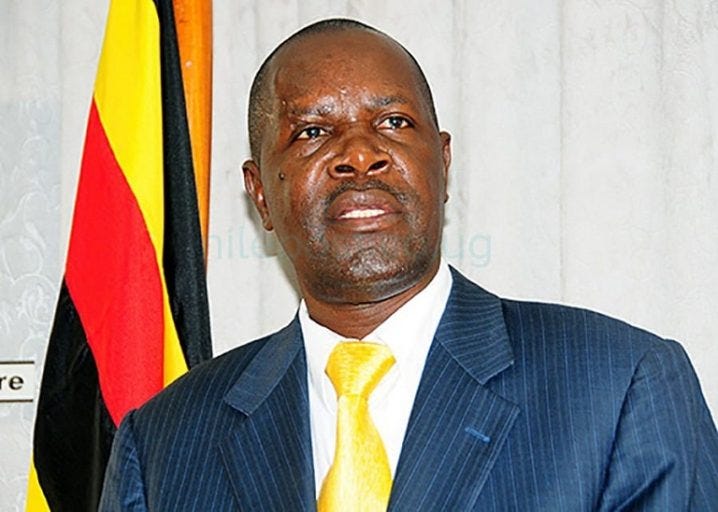
Nine days later, Ofwono Opondo of the Ugandan Media Centre penned another personal polemic on the situation in Gaza that tracks closely with the thinking of the Ugandan government.
In the polemical article, Mr. Opondo criticized the Biden Administration and its European allies for their complicity in Israel’s genocidal campaign against the Palestinians in the Gaza Strip. He also condemned US intervention in the conflicts in Syria and Iraq.
He touched on the humiliating manner in which US troops “ran away” from Afghanistan, and condemned the Euro-American mainstream media for reacting with “visible glee” when 137 Russians were killed in the Crocus city terror attack.
Museveni vetoed the sex crime bill, citing its harsh provisions and requesting amendments. Parliament made some minor changes and passed the bill again. Museveni signed the bill into law on 26 May 2023.
The world had changed and he was no longer afraid of sanction threats from Europe and North America. When the World Bank announced that it was suspending all funding to Uganda, President Museveni was not perturbed. He had already made new economic arrangements with China and Russia.
Relations between the United States and Uganda remained cool until the highly transactional Orange Strongman returned to the White House.
Under the second Trump Administration, diplomatic relations with Uganda returned to normal. Determined to keep things that way, the Museveni government agreed to receive Trump’s migrant deportees, causing widespread uproar in the East African country.
Uganda already hosts nearly two million refugees who had fled conflicts in Sudan, South Sudan, and the Democratic Republic of Congo. Uganda is also hosting an additional 2,000 Afghan refugees, albeit temporarily.
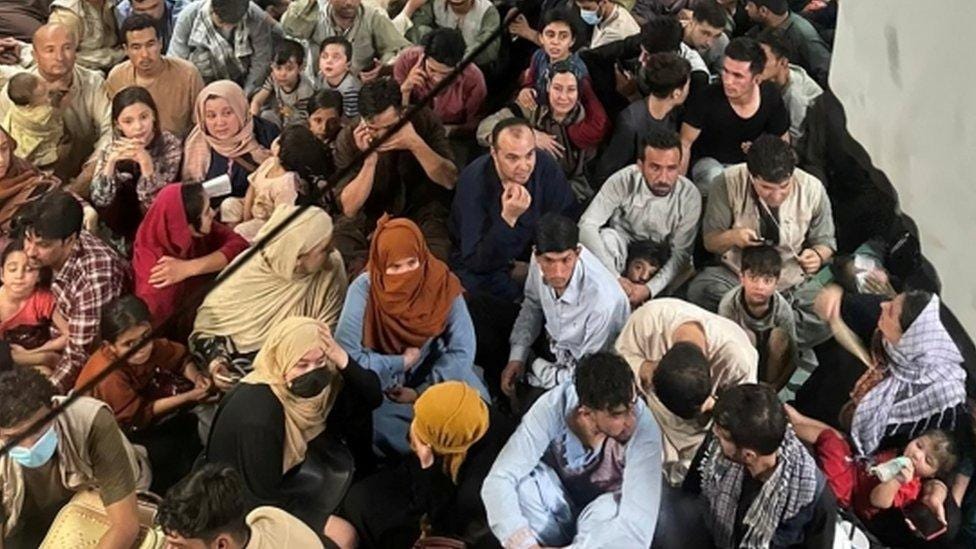
Given the millions of refugees already living in Uganda, it is no wonder that many Ugandan citizens are upset about the new agreement signed with the Trump Administration to receive illegal migrants deported from the United States. For one thing, these migrants are not actually genuine refugees in dire need. For another, many of them have criminal records.
To douse the uproar, the Ugandan government stated that migrant deportees with criminal records would not be accepted. The government also stated that it informed the Trump Administration that it would prefer deportees of African origin as opposed to those of Latin American extraction.
What does Uganda get in return from the Trump Administration for serving as another African dumping site for its illegal migrants? Well, I don’t really know.
A US government press release stated that Secretary of State Marco Rubio had a phone conversation with Ugandan President Museveni in which “reciprocal trade” and “commercial ties” were discussed.
The statement suggests that the Trump Administration had dangled some lucrative trade concessions in front Ugandan state officials.
Perhaps, Trump promised to reverse Biden’s decision to kick Uganda out of the AGOA Programme in August 2024 as punishment for passing of the sex crimes law.
[c] Ghana
Like nearly Anglophone African countries, Ghana prioritizes its ties with the United States and the United Kingdom while maintaining friendly relations with Russia and China. There is nothing strange about this. The populations of most Anglophone African countries tend to be very pro-Western.
Of course, there are the three outliers— Zimbabwe, Namibia, and South Africa—where affinity for Russia is much stronger for historical reasons.
Despite leaning heavily pro-Western, Ghana has, on certain occasions, had to refuse American demands. A good example was the firm rejection of the Biden Administration’s request that Ghana downgrade ties with China. That request was delivered in person by Kamala Harris, who was then the Vice-President of the United States, as I reported in a previous article:
During [Kamala’s] visit to the Ghanaian city of Accra, the British-educated President Nana Akufo-Addo gave a long speech in which he recounted how many Ghanaians had benefitted from US government grants to study in American universities during the 1950s and 1960s.
He also spoke affectionately of links between Ghanaian nationalist leaders and Black American civil rights leaders such as Martin Luther King and W.E.B Du Bois, who spent his final years in Accra and died there on 27 August 1963.
And yet after paying tribute to his country’s strong relations with the United States, the same President Nana Akufo-Addo brusquely refused Kamala’s request that Ghana downgrade ties with China. He also rejected her attempt to intervene in a legislative bill concerning sexual morality, which was then going through the Ghanaian Parliament, stating that USA had no business interfering with it.
When the Tory government of Boris Johnson was searching for a suitable dumping ground in Africa for his illegal migrants, one of the places he had in mind was Ghana.
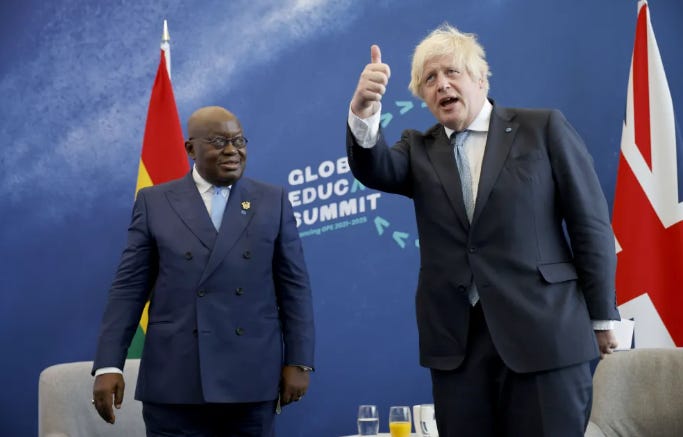
President Nana Akufo-Addo had spent part of his early years in the United Kingdom. He attended secondary school in Sussex and later studied at Oxford University. He worked as a barrister in the courts of England for a while before returning home to Ghana.
If Boris thought that his fellow Oxford alumnus at the helm in Ghana would be amenable to his migrant resettlement proposals, he was wrong. Nana Akufo-Addo refused to entertain the idea, rejecting any discussions of it.
Despite the smack-down from Nana Akuffo-Addo, Boris Johnson attempted to shore up flagging support among fellow Tory parliamentarians in January 2022 by claiming that Ghana had agreed to receive any illegal migrant deported from the UK.
Upon hearing about it in the British press, the Ghanaian Foreign Ministry isssued a formal statement denying Boris Johnson’s claims:
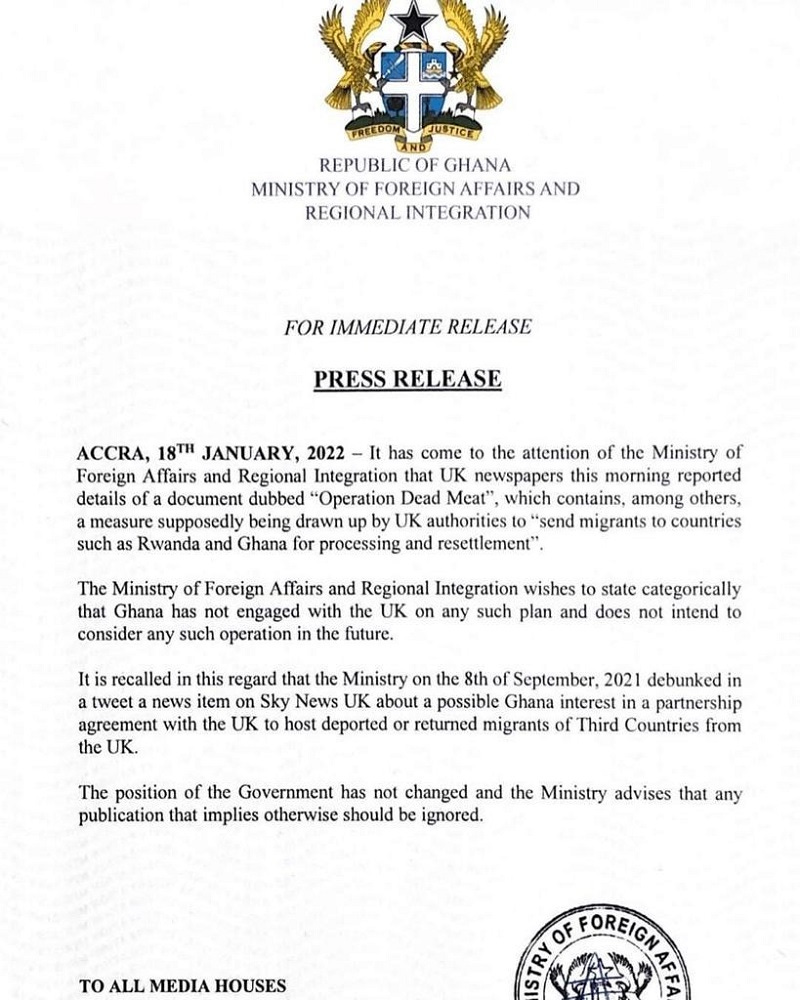
An embarrassed Tory government went into damage control. By April 2022, Boris Johnson was ready to announce that Rwanda has agreed to the resettlement of illegal migrants. Unfortunately for Boris, the courts intervened to block the resettlement programme from going forward. His popularity among Tory parliamentarians kept dwindling. In September 2022, those parliamentarians removed him as Tory Party leader and Prime Minister of the United Kingdom.
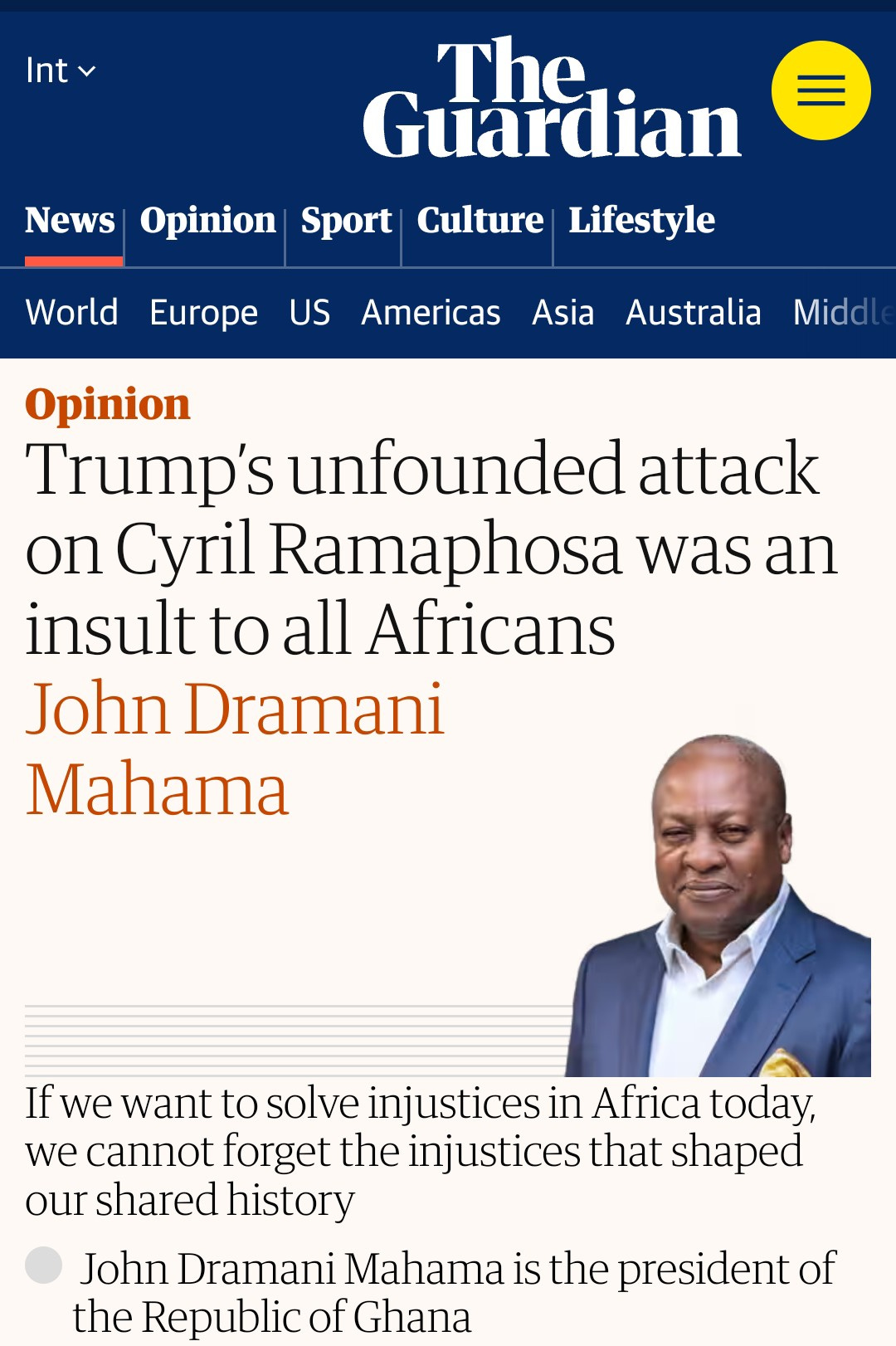
By the time Donald Trump returned to the White House on 20 January 2025, John D. Mahama had replaced the Nana Akuffo-Addo as President of Ghana. Just like Trump, Mahama is on his second non-consecutive presidential term.
Unlike his predecessor, President Mahama is willing to take deportees from a third country. Mahama agreed to accept Trump’s migrant deportees, free of charge, provided they were West African.
At this point, I would like to pause to express my puzzlement at Trump’s refusal to deport West African migrants directly to their countries of origin. For example, the Nigerian government has shown readiness to accept citizens deported from the United States. Instead of availing itself of that opportunity, the Trump Administration is deporting Nigerian migrants to third countries.
Nigerian citizens were among 14 West African migrants flown on a USAF transport plane from the United States to Ghana by the Trump Administration. While detained in a Ghanaian military camp, eleven migrants sued to the Mahama Administration, stating that they were being held against their will.
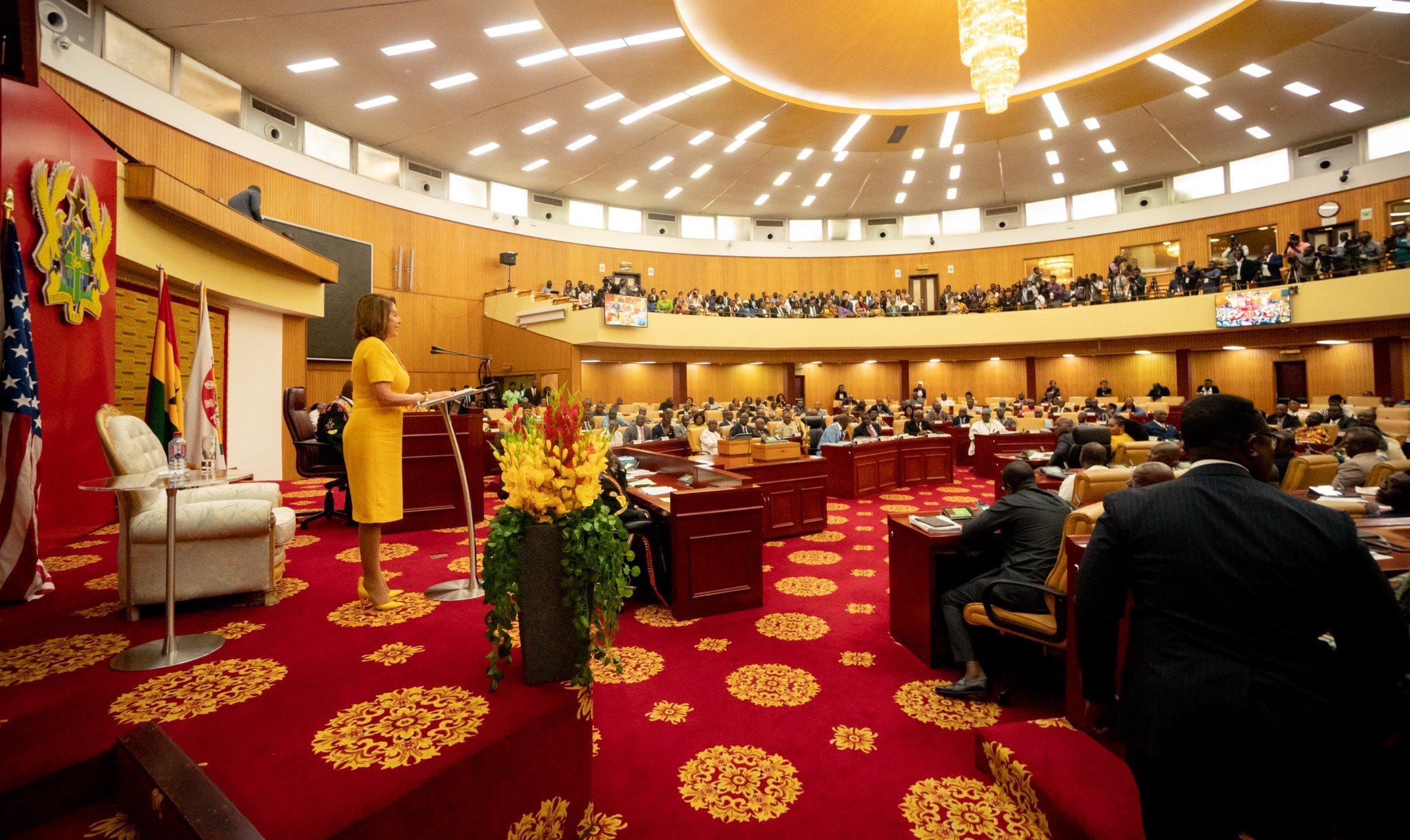
Before the Ghanaian courts could hear the case, President Mahama started sending some of the deported migrants to their countries of origin—Nigeria, Gambia, Liberia, Togo.
Lawyers for the migrants claim that some of them would face persecution upon return to their native countries. One migrant from Gambia, who claims to be bisexual, said he was deported by the Trump Administration despite having US legal protection against being sent back to LGBT-hostile Gambia.
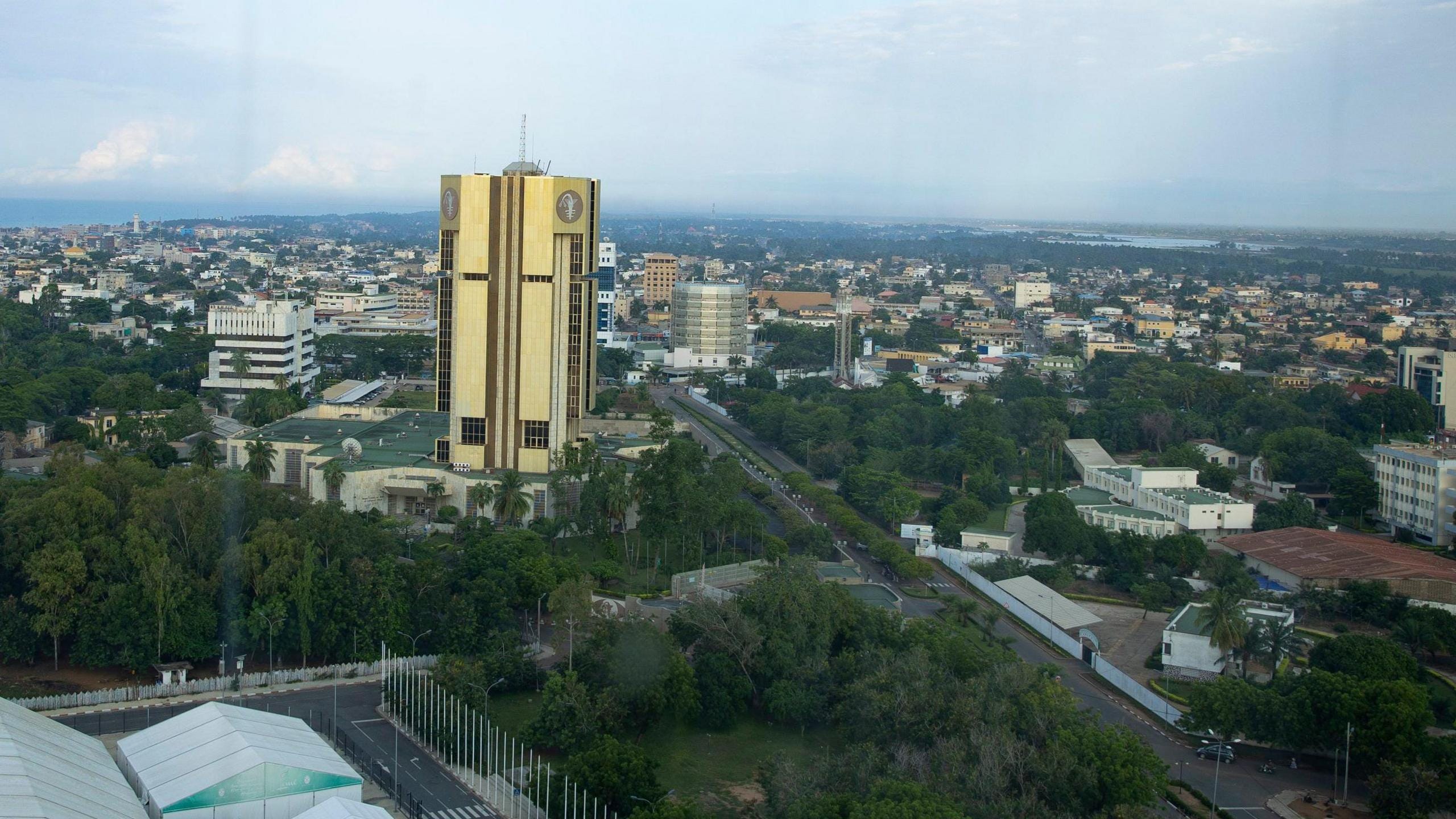
There also allegations in BBC that Ghanaian authorities did not return six migrants to their country of origin. Ghanaian officals simply drove the migrants across the border to the Republic of Togo and dumped them there.
Despite the controversy, President Mahama announced that his country would accept another 40 deportees from United States.
Representatives of opposition parties in the Parliament of Ghana have called for an immediate suspension of the US-Ghana agreement until it can be ratified by law. They are also demanding full transparency and accountability regarding the arrangement.
[d] South Sudan
The migrant deportation deal struck between the Trump Administration and South Sudan is the most ludicrous I have ever seen. For one thing, South Sudan is a politically unstable country. For another, South Sudan still has more than a million of its own citizens living as refugees in neighbouring Uganda.
Some of those South Sudanese refugees fled to Uganda during the Second Sudanese Civil War (1983-2005), which subsequently led in the peaceful secession of South Sudan from the Republic of Sudan on 9 July 2011. Other refugees are from the more recent civil war that occurred within independent South Sudan between 2013 and 2020.
An uneasy truce continues to exist between the armed forces of the autocratic South Sudanese President Salva Kiir Mayardit and irregular forces loyal to his longstanding rival, Vice President Riek Machar.
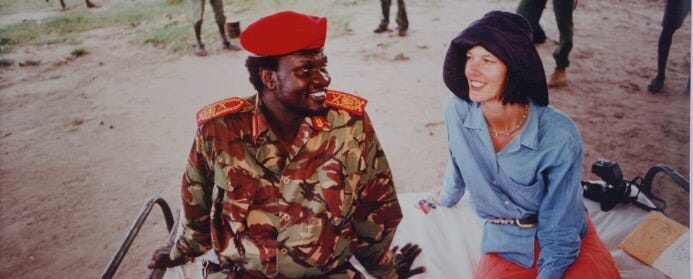
Unlike many of my peers, I did not celebrate in July 2011 when South Sudan became an independent nation. While many had predicted that all would be well after the division of the old Republic of Sudan into two separate countries along Muslim-Christian lines, I held a different view.
Long before South Sudan became a sovereign nation, the signs were there that partition along religious lines was no panacea.
The Second Sudanese Civil War is often depicted as a straightforward conflict between an Islamist national goverment and Christian rebels, who sought regional autonomy for their South Sudanese homeland or complete independence as a sovereign state.
In reality, the Second Sudanese Civil War was mostly a messy free-for-all conflict in which rival Christian rebel groups, divided by ethnic differences, fought each other while simultaneously fighting the military forces of the Islamist government.
On many occassions, certain Christian rebel groups allied themselves with Islamist government forces to fight other Christian rebel groups.
Two Christian rebel groups (SPLM-Nasir and Nuer White Army) dominated by ethnic Nuer guerrillas massacred 5,000 Christian civilians because they shared the ethnic Dinka heritage of a rival rebel group (SPLM).
The most powerful Christian rebel leader, Dr. John Garang, a former Colonel in the Muslim-dominated Sudanese Army, was vehemently opposed to the partition of Sudan.
He understood that dividing the country along religious lines wouldn’t solve anything, and that oil-rich South Sudan was essentially a semi-anarchic zone without basic infrastructure, institutions and a proper civil service— the things that are critical for the creation of a functional state.
Garang favored extensive political autonomy for the South Sudanese region within a united federal Sudan. However, he stood alone in that preference. Other Christian rebel leaders harboured ambitions of becoming powerful leaders inside an independent and sovereign South Sudan.
After a long period of stalemate, the Second Sudanese Civil War came to an end in 2005. The peace agreement signed by then-Sudanese military ruler General Omar al-Bashir, Dr. John Garang, and other Christian rebel leaders granted regional autonomy to South Sudan. More importantly, the agreement stipulated that a referendum be held in six years to determine whether South Sudan should secede or remain part of a united Sudan.
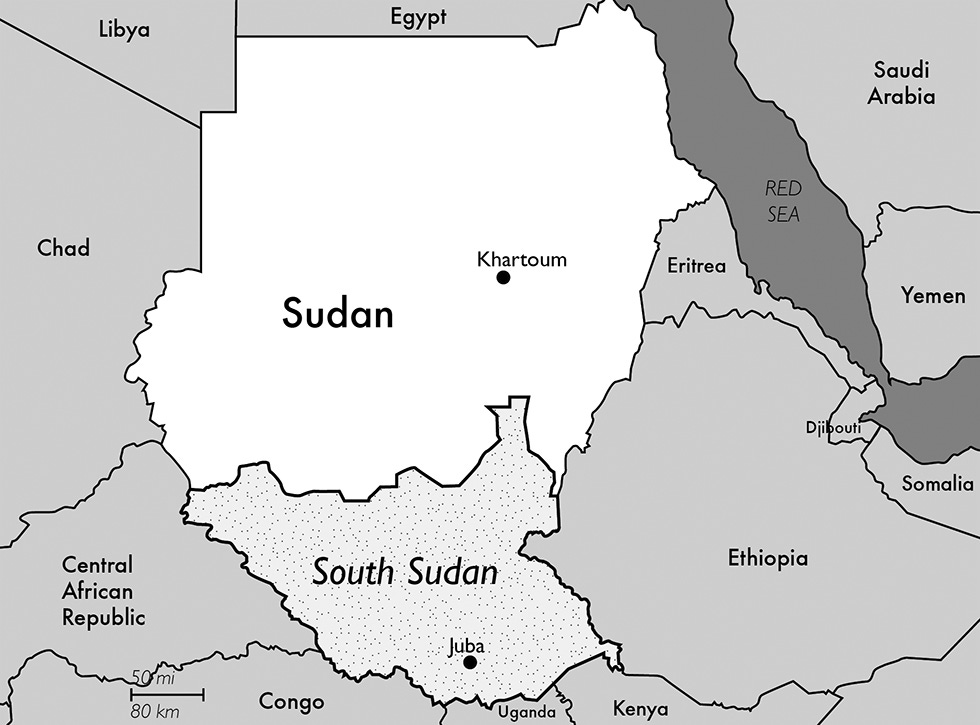
The Sudanese military high command was against any referendum on partitioning the country, but General al-Bashir did not listen. He was firm in his conviction that the South Sudanese people would vote in the future referendum to remain part of a united Sudan.
Bashir was confident that Garang would be able to persuade his people to reject secession. After all, during the civil war, Garang had coined the word “Sudanism” to define a set of ideas on how a united, post-war Sudan should be governed with equal citizenship rights for everyone, irrespective of their religion, ethnicity, or region of origin.
However, things did not work out the way General al-Bashir had hoped, as I explained in an article in May 2023:
Upon signing the 2005 peace deal, Bashir did the following: (1) he elevated John Garang to the position of Vice President of Sudan; (2) he reserved 20% of national government jobs for the South Sudanese; (3) he reinstated the Autonomous South Sudan Region that was abolished in 1983. The region gained the right to exploit its own petroleum resources and maintain a military force separate from the national armed forces of Sudan.
Bashir’s dream of preserving Sudan as a united country was dashed when John Garang died in a helicopter crash on 30 July 2005 while visiting neighbouring Uganda. The late South Sudanese leader had been Vice President of Sudan for only three weeks before his death.
Another South Sudanese leader, Mr. Salvar Kiir, became the Vice President of Sudan on 11 August 2005. Unlike John Garang, he was dismissive of the concept of “Sudanism” and quickly declared his intention to seek the full independence of the Autonomous South Sudan Region in the upcoming 2011 referendum.
In fact, the downfall of Omar al-Bashir and the current war raging between the Rapid Security Forces (RSF) and the Sudanese armed forces can be traced directly to the partition of Sudan in 2011.
The Sudanese military high command was enraged when Bashir’s assurances that the South Sudanese people would reject partition in the referendum proved to be misplaced.
To protect himself from the wrath of the military high command, Bashir began to build up his irregular Janjaweed allies in the northwest region of Darfur into a formidable rival of the Sudanese armed forces.
Another excerpt from the May 2023 article:
The year 2013 is key because that was when the private militia known as the “Janjaweed” suddenly became the core of a new government paramilitary called the Rapid Support Force (RSF), tasked with destroying the Darfuri rebels.
Despite having neither formal education nor any military training, the civilian leader of the Janjaweed militia, Mr. Hamdan Dagalo, was proclaimed a “Brigadier-General” of the newly created RSF by his friend and benefactor, President Omar al-Bashir. The professional Sudanese military was horrified.
That event completed the breakdown of the relationship between Bashir and top military brass, which started with his agreement to allow a South Sudanese referendum.
Fearing that the Sudanese military might overthrow him, Bashir began to build up the Rapid Support Force (RSF) as an alternative army that will be loyal and protect him from any coup d’etat.
By 2018, the RSF paramilitary was barely recognizable from its previous incarnation as the Janjaweed militia. Whereas the Janjaweed was composed mainly of lightly armed men on horses and camels, the RSF was equipped with howitzers, mortars, helicopter gunships, and tracked-wheel armoured tanks.
As Bashir would later find out, his strategy of building up RSF as a loyalist paramilitary force did nothing to protect him from being overthrown by the Sudanese Army. The RSF leader Hamdan Dagalo did not fight to prevent his benefactor from being overthrown. Hamdan simply struck a deal with the coup leaders and abandoned Bashir to his fate.
However, the deal between the RSF leader and the Sudanese military leadership did not last. Top military brass held the RSF paramilitary in deep contempt and devised plans to disband it.
In a bid for self-preservation, the RSF launched a pre-emptive attack against the Sudanese armed forces, triggering the current shooting war. That violent conflict in Sudan is now in its second year with no end in sight.
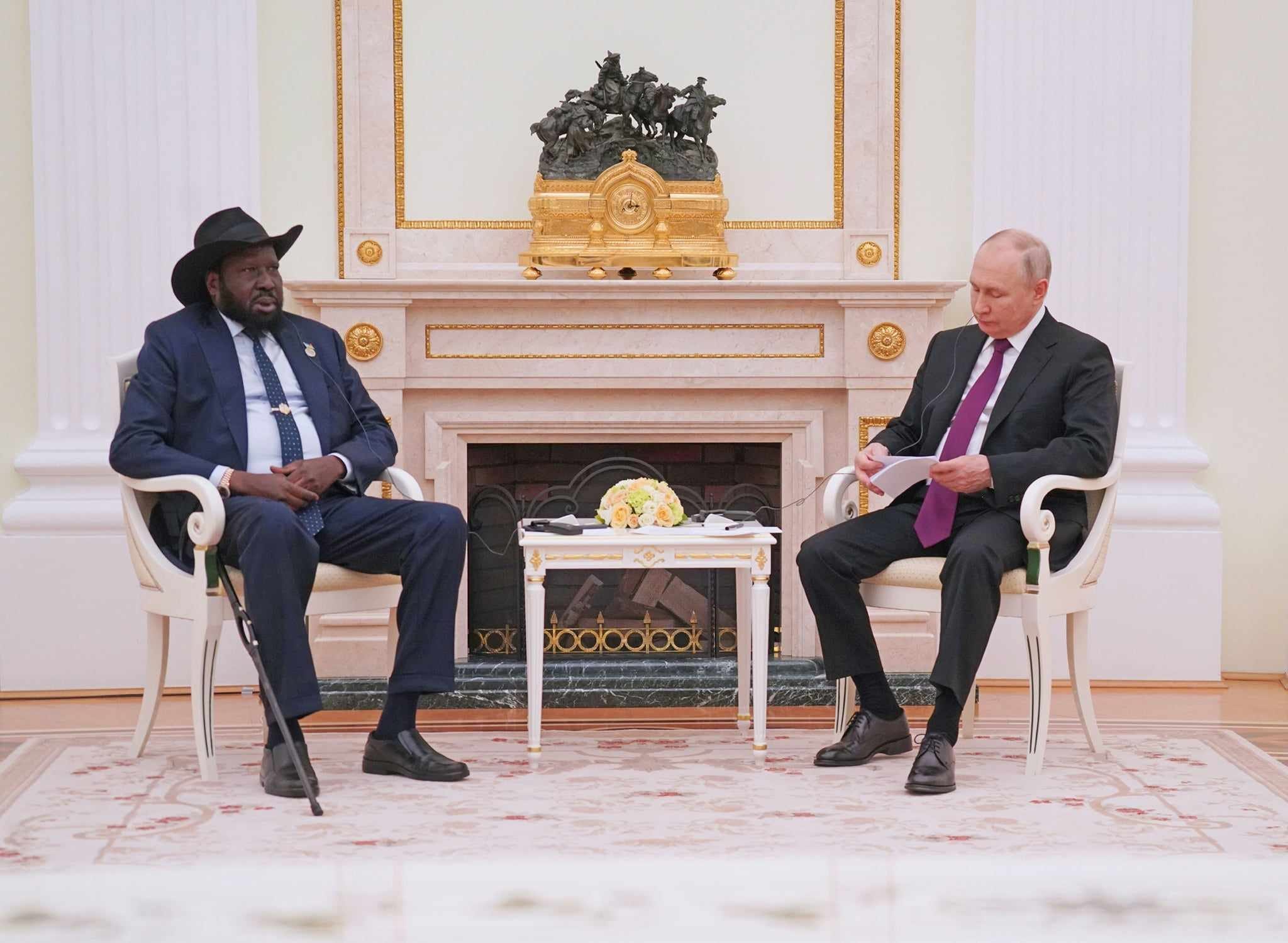
Two years after gaining independence, South Sudan plunged into its own civil conflict, mirroring the path of neighbouring Sudan.
South Sudanese refugees, who had fled to Uganda during the Second Sudanese Civil War (1983-2005), were unable to return home. Instead, a fresh batch of refugees fleeing the more recent South Sudan War (2013-2020) joined their exiled compatriots in Uganda.
Currently, the Ugandan government is harbouring refugees from both Sudanese states. Refugee camps in Uganda are inhabited by more than a million citizens of South Sudan and thousands of citizens from Sudan.
There is no prospect of South Sudanese refugees going home, given the collapse of the fragile peace agreement between warring factions in their country. In March 2025, President Salva Kiir placed his chief rival, Vice President Riek Machar, under house arrest.
Riek Machar commands respect among members of the self-proclaimed Nuer White Army (NWA) guerrillas who fought against the government-operated South Sudanese Defence Forces (SSDF) loyal to Salva Kiir.
Riek appeared in court this September on charges of murder, crimes against humanity and treason over a NWA raid on a military base that resulted in deaths of over 250 SSDF soldiers.
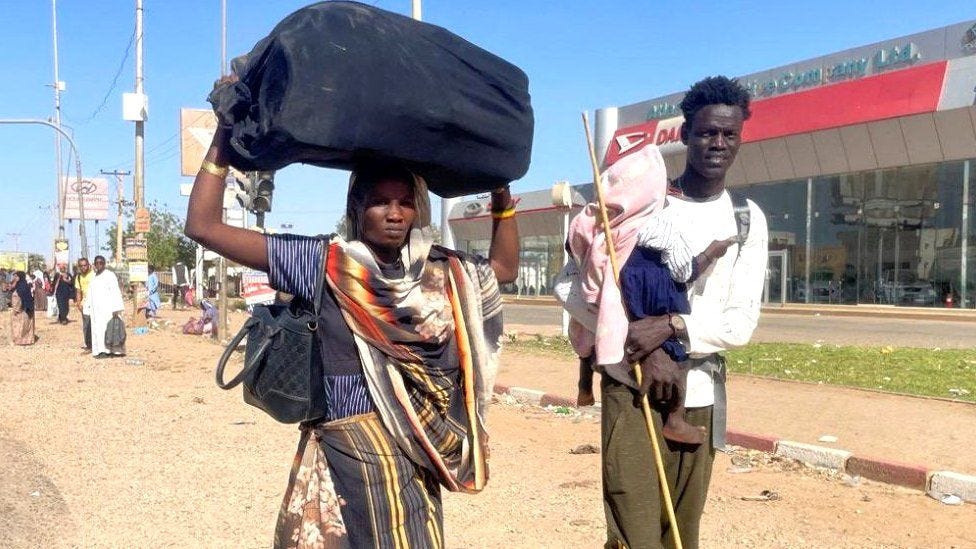
Despite having more than a million of its own citizens living as refugees in Uganda, the South Sudanese government is hosting 548,036 refugees from neighbouring Republic of Sudan, Central Africa Republic, Ethiopia and the Democratic Republic of Congo. Yes, you read that right. A country, at the cusp of a war, is hosting foreign refugees on its territory while many more of its own citizens are living as refugees in another country.
When Trump approached the government of South Sudan with his proposal, the initial reaction was a lack of interest. South Sudan was not keen on enriching the diversity of its foreign refugee population with Southeast Asian and Latin American migrants deported from the United States. But then, Trump is not a man who takes “no” for an answer.
Trump’s visa restrictions on Nigerian citizens intending to visit the United States did not alter Nigeria’s decision to reject Venezuelan deportees. Threats of hike US tariffs on Nigerian goods did not move the needle either.
None of the above dissuaded Trump from applying the arm-twisting tactic on South Sudan when it demurred on the question of adding Vietnamese, Laotian and Mexican migrants to its huge foreign refugee population.
Trump revoked the visas of all South Sudanese citizens legally resident in the United States and banned the issuance of new visas to any South Sudanese passport holder intending to visit his country.
That was all the arm-twisting that was required to get South Sudan to agree to the demand of the Orange Strongman. Accordingly, a USAF transport plane flew eight Laotian, Vietnamese and Burmese deportees from the United States to Juba city, South Sudan.
The Mexican migrant who was supposed to be sent to South Sudan, along with the other deportees, wisely elected to return home to Mexico. Who says Trump’s knuckle-dragging tactics doesn’t work, eh?
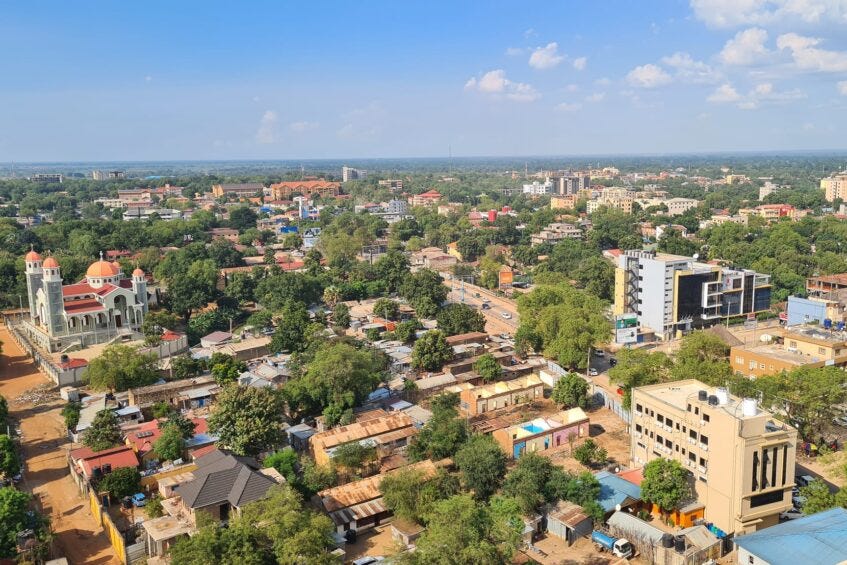
Like most of South Sudan, the capital city of Juba largely decrepit. Most districts of the city lack proper infrastructure and only a fraction of its roads are actually paved. I predict that Trump’s deportees in Juba would eventually beg to return to their countries of origin.
[e] Swaziland (a.k.a Eswatini)
Eswatini is the current name of the tiny African country formerly known as Swaziland. Nevertheless, I will stick with the old name as the new one weirdly sounds like the brand name of an Italian software product.
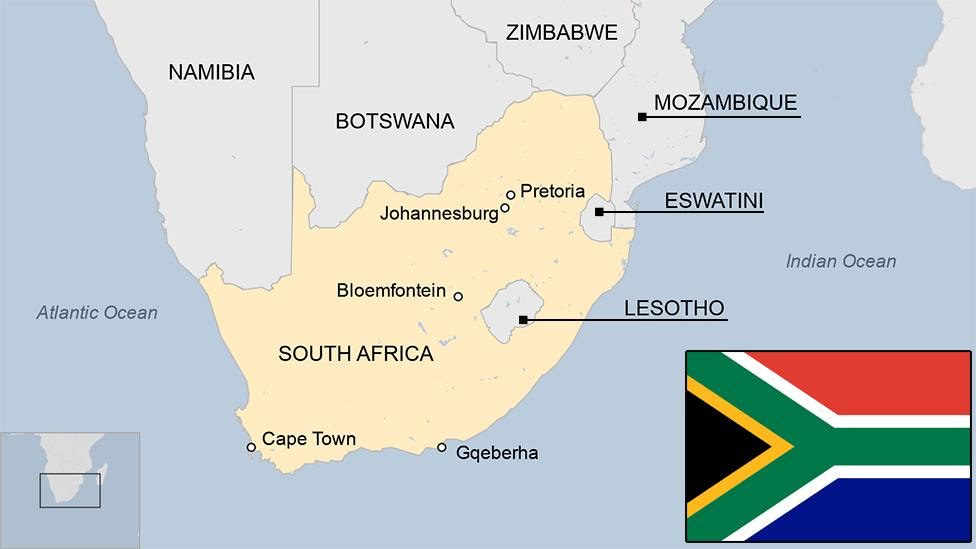
Swaziland along with Lesotho are two landlocked monarchial states that share substantial land border with South Africa.
Lesotho, the larger of the two tiny kingdoms, is effectively a sovereign enclave inside South Africa, which meant it is completely dependent its giant neighbour for everything.
During the existence of the apartheid South African state (1948-1994), Lesotho was forced to balance between its economic well-being and its support for the anti-apartheid activities of exiled ANC activists on its territory.
In 1986, apartheid South Africa backed a coup d’etat that overthrew the parliamentary government of Lesotho and replaced it with a military junta that ruled in the name of the Constitutional Monarch Moshoeshoe II and later on his son, Letsie III.
The military junta in Lesotho showed its gratitude for the backing it received from the apartheid state by expelling ANC activists from the kingdom. Elected governments did not return to Lesotho until 1993.
Unlike Lesotho, Swaziland is not an enclave, a small fraction of its land border is shared with Mozambique. Swaziland never tried to balance between ANC exiles on its territory and the apartheid South African state. In fact, Swaziland fully embraced its giant pariah neighbhour. It joined the apartheid regime-controlled Southern African Customs Union. Swazi authorities secretly allowed the apartheid state to circumvent international sanctions by using the kingdom’s terrority as a transshipment point.
On the basis of a clandestine security agreement signed with the apartheid regime, Swazi authorities often harassed ANC exiles on its territory and eventually expelled them. In 1984, Swaziland finally came out of the closet, and openly established diplomatic ties with the apartheid state.
Swaziland never understood the concept of parlimentary constitutional monarchy and was baffled by Lesotho’s decision to adopt that system after its independence from the UK in 1966.
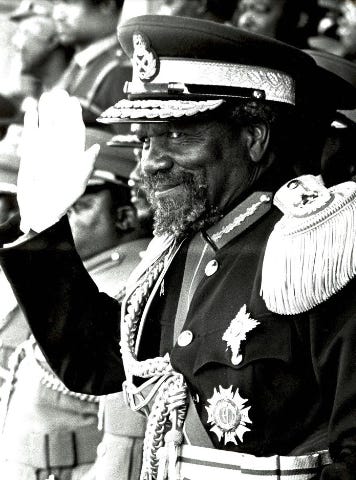
The most pivotal figure in shaping post-independence Swaziland is King Sobhuza II, who ran the kingdom for 83 years— the longest verifiable reign of any monarch in recorded history.
Sobhuza II ascended to the Swazi throne in December 1899 after the death of his father King Ngwane V. Since, he was only a four-month-old, his uncle and grandmother administered the kingdom as regents until a few month after his 22nd birthday in 1921.
At the time, Swaziland was a self-governing British Protectorate, which meant that Sobhuza II and his royal officials were able to manage the internal affairs of the kingdom with minor interference from British colonial officers.
It is important to highlight that in that period, the self-governing political system present in Swaziland applied only to a few British colonies worldwide. The vast majority of colonies were under direct administration by British colonial officers, often with minimal participation from the native population.
However, the end of World War II changed everything. The British became willing to shed their colonial empire. India, Pakistan, Ceylon and Burma were the first to gain outright independence between 1947 and 1948. British Malaya became a self-governing colony with ethnic Malay rulers granted broad political autonomy. Malaya eventually gained full independence in 1957 and subsequently merged with Singapore, Sabah, and Sarawak to form Malaysia in 1963.
At the beginning of the 1950s, the British began to grant self-governing autonomy to directly-administered African colonies, which was followed by full independence a few years later. Ghana was the first to gain independence in 1957. This was followed by Nigeria (1960), Sierra Leone (1961), Tanganyika (1961), Uganda (1962), Kenya (1963), Gambia (1965).
In the Southern African subregion, the white settler regimes running the self-governing colonies of South Rhodesia and South Africa rejected British proposals to share political power with the black African majority, and declared themselves full sovereign states.
In 1965, the Oxford-educated King Moshoeshoe II accepted British proposals for the a self-governing Colony of Basutoland to adopt the parliamentary constitutional monarchial system. The following year, Basutoland gained independence as the Kingdom of Lesotho.
By contrast, King Sobhuza II, also British-educated, vehemently opposed plans to transform the self-governing British Protectorate of Swaziland into a constitutional monarchy upon independence. He formed a political party that contested and won all the parliamentary seats during the British-organized pre-independence elections of 1967.
Swaziland gained complete independence from the UK in September 1968. Despite his own political party dominating the national legislature, King Sobhuza II despised the parliamentary system and his own absurd status as a Constitutional Monarch, who de facto exercised the powers of an absolute ruler.
In April 1973, he used his secretly raised private milita to enforce the repeal of the constitution and the dissolution of all political parties. Thereafter, he began ruling by decree as de jure absolute monarch without reference to parliament.
Under his direct rule, Swaziland enjoyed political stability and economic growth. He developed education and healthcare programmes for the population.
In 1977, King Sobhuza II abolished the fully elected parliament altogether. A year later, he adopted a new constitution that allowed for a powerless parliament confined to an advisory role.
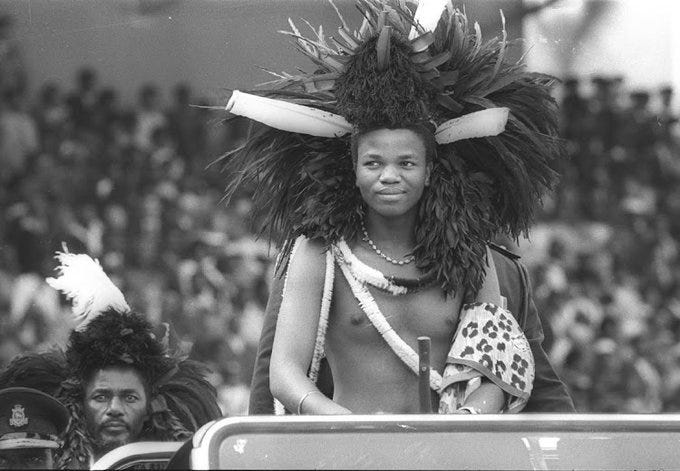
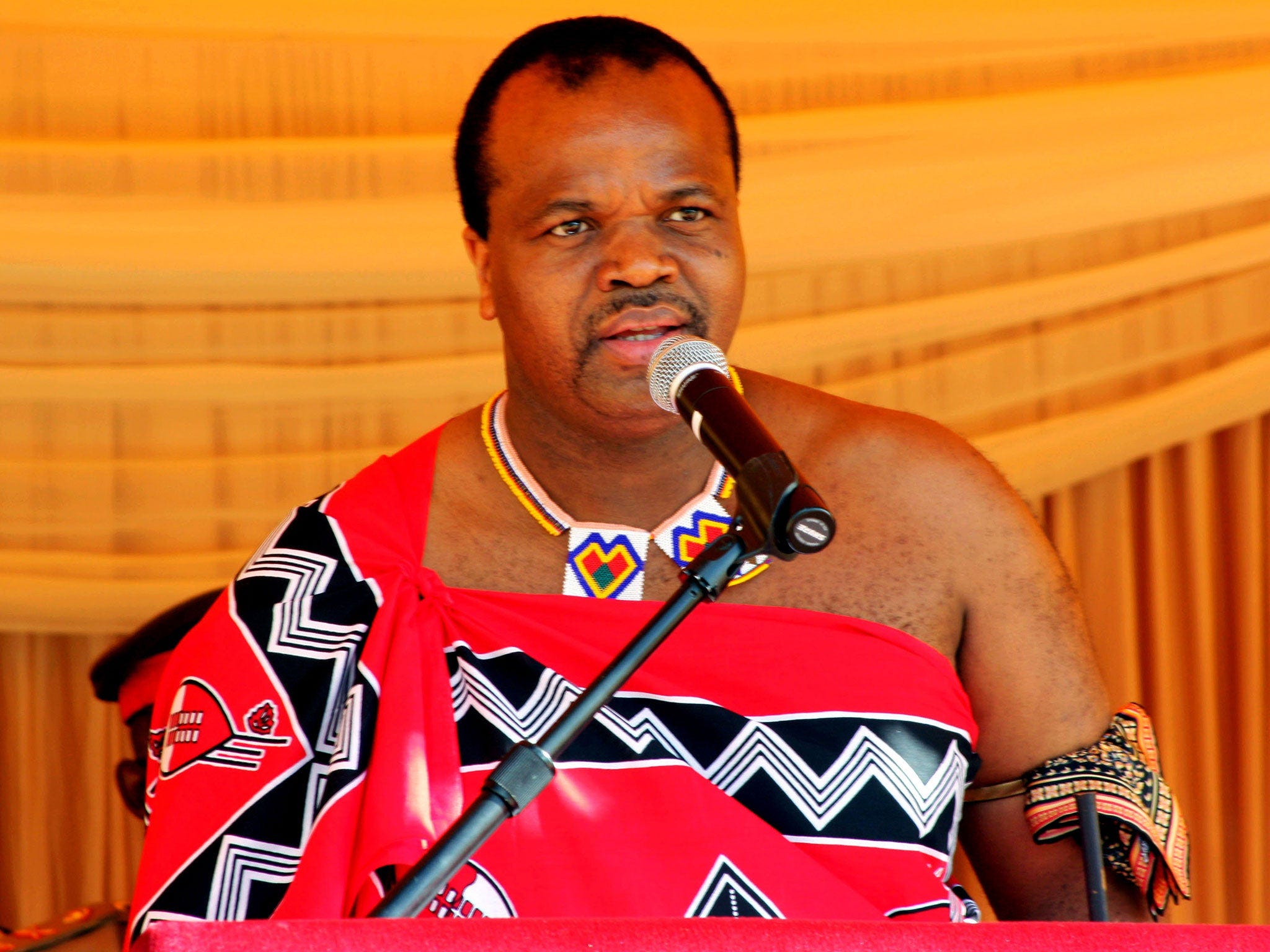
After the death of King Sobuza II in 1982, his 14-year-old son Prince Makhosetive was nominated as his successor. Unlike his father, he was not crowned as king while underage. Instead, he was made to focus on his education in Britain. His ethronement was planned for when he turned 21. In the interim, two out of Sobhuza’s 70 widows administered the kingdom as Queen Regents. One of the regents was Nftombi Twala, the Crown Prince’s mother.
On 25 April 1986, three years earlier than anticipated, 18-year-old Prince Makhosetive was crowned King of Swaziland. He took the regnal name Mswati III.
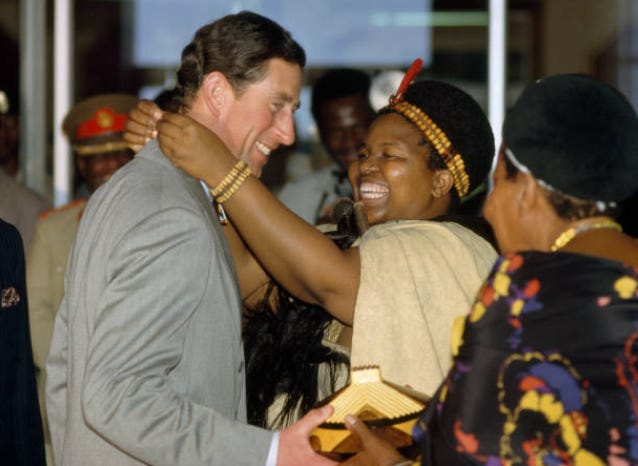
At the time of his coronation, Mswati III was one of youngest monarchs in the world. He kept the powerless parliament created by his father as a necessary veneer to mask the excesses of his absolute rule. All political opposition to absolute monarchy was quashed. General strikes called by labour unions were declared illegal.
A large proportion of the parliamentary seats are filled by individuals appointed by Mswati III without any elections. The Prime Minister is among the appointed parliamentarians. The remaining parliamentary seats are filled by pre-selected political candidates, who had contested and won local elections in their assigned constituencies.
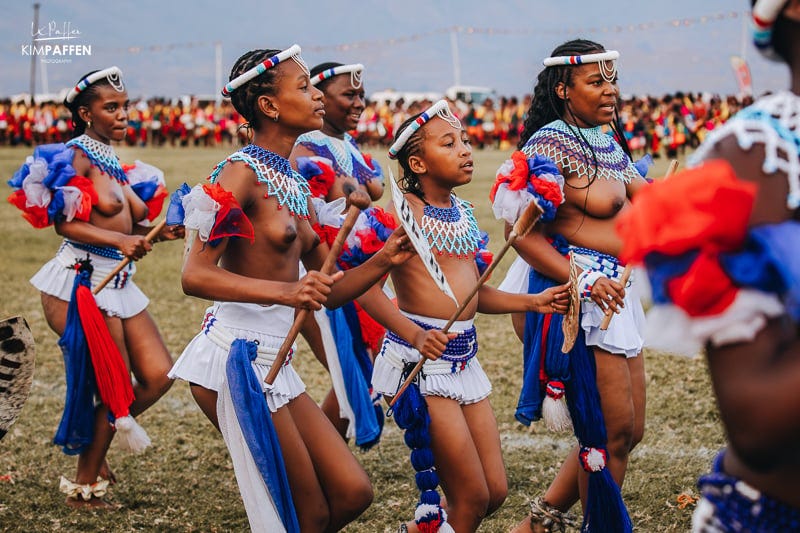
Unlike his father, Mswati III claims to be an Evangelical Christian and has banned mini-skirts and divorce in Swaziland. Like his father, he is a firm believer in polygamy. However, he has been modest enough not to try to break his father’s record of 70 wives by acquiring only 16 spouses for himself.
Despite his squeamishness with mini-skirts, King Mswati III is quite happy to embarass the modern sensibilities of many Africans by insisting on preserving his ancestors’ annual tradition of arranging for young women to dance bare-breasted before the royal court.
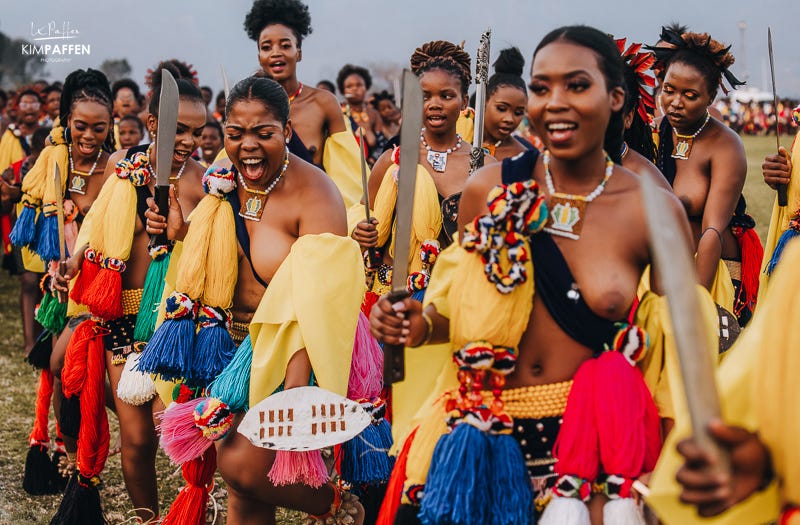
During the eight-day-long Reed Dance Festival, the young females compete with each other for the attention of a king who is always looking to add new wives to his harem. International criticism within and outside the African continent has had no effect on the practices of the Reed Dance Festival, which also attracts foreign tourists.
A large proportion (but not all) of the 16 women that Mswati III married were selected through this annual festival. The first two wives were chosen for him by the royal family. Mswati III began choosing his own spouses via the Reed Dance festival, beginning with the third wife, whom he married when he was 18 and she was 17.
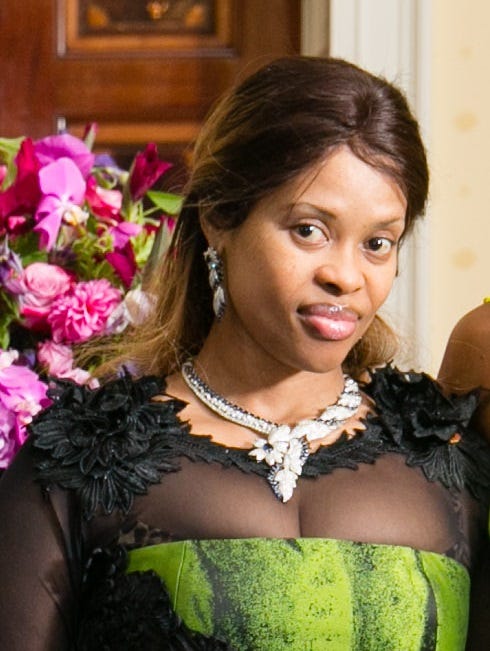
In September 2002, eighteen-year-old Zena Soraya Mahlangu caught the eye of the king when she performed in the Reed Dance Festival. However, she was not selected to be his bride because she had a twin brother. Ancient Swazi tradition forbade the king from marrying a wife with a twin.
Nonetheless, Mswati III could not let the matter drop. In October 2002, he arranged for two royal courtiers to abduct Zena from school and take her to the home village of the ruling Dlamini dynasty to prepare to become a royal bride. The abduction sparked uproar in Swaziland and beyond.
Outside Swaziland, Amnesty International reacted with rage. Inside Swaziland, local human rights groups, opposition political figures, trade unionists and the lawyers’ association condemned the king’s behaviour. Zena’s mother threatened to take legal action against the king, demanding that her daughter be returned. None of that changed anything.
In 2010, Mswati III declared Zena his tenth wife, ignoring multiple court orders demanding access to the abductee to find out whether or not she was willing to marry the king.
Zena’s mother was not granted access to her until the traditional marriage ceremony had occurred. Amidst the court battle and public uproar, the attorney-general of Swaziland intervened to “regularize” the king’s behavior and allow the marriage to acquire the veener of legality.
However, over the years, it seems from all indications that Zena is “satisfied” with her life as one of the wives of Mswati III. In 2011, she travelled to the UK to attend the royal wedding of British Prince William to Kate Middleton.
Zena has since given birth to two children. She has never been shy of spending her husband’s wealth, estimated to be worth 200 million dollars, in a country where majority of the population lives in poverty.
There has been periodic outbreaks of mass protests over the profligacy of the royal family and the rejection of calls for genuine democratic reforms. In July 2007, thousands of people demonstrated on the streets to press for democracy. In August 2008, hundreds of Swazi woman marched to protest the high cost incurred during a shopping trip taken oversees by nine of the King’s then-thirteen wives.
Between 2021 and 2023, a series of violent mass demonstrations took place in Swaziland to protest the king’s authoritarianism, misuse of government funds, and suppression of the political opposition.
All protests were crushed. Members of the banned Communist Party of Swaziland (CPS) were singled out for special treatment by the security services. Many CPS members went underground or fled the country.
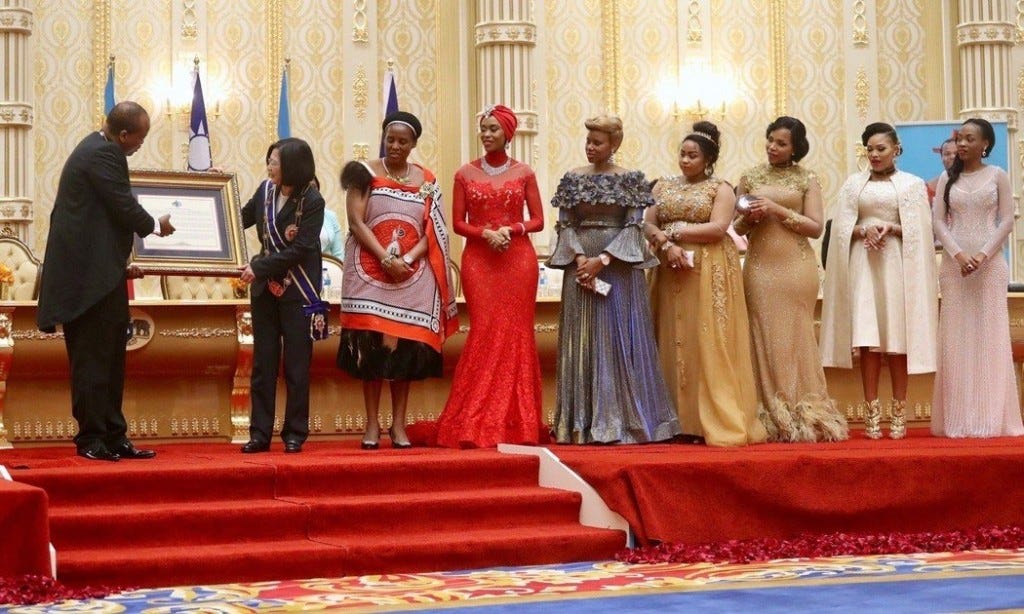
Since Zena became a royal bride in 2010, Mswati III has gone on to add more young women to his harem, bringing the number of wives to a total of sixteen at the start of 2018. In spite of the immense wealth at the disposal of the harem, all has not been well in paradise.
Many of the wives felt neglected and emotionally abused. Putsoana Hwala (5th Queen consort) and Delisa Magwaza (6th Queen consort) fled the royal palace in 2004. They remain officially married to Mswati III despite their absence from the royal household. Divorce is banned in Swaziland. Details of Delisa’s affair with a younger Swazi man, who she had met during a trip to South Africa, has since been publicly revealed, causing embarrassment to the royal family.
The 12th Queen consort, Nothando Dube, who married Mswati III as a 16 year-old in 2005, alleviated her loneliness by carrying on a torrid affair with Ndumiso Mamba, the country’s Minister of Justice and close friend of the king. She would often disguise herself in an army uniform to get past security guards at the palace and rendezvous with her lover.
In July 2010, luck finally ran out on her. She and Ndumiso were caught in bed at a hotel during a police raid in the city of Mbabane. The adulterers were subsequently placed under house arrest.
Released after a year of detention, Nothando was banished from the royal court and prevented from seeing her three children. She died of skin cancer at a South African hospital in March 2019. Until her death at the age of 31, she remained the wife of Mswati III.

The 7th Queen consort, Angela Dlamini, spent years complaining of neglect. When she finally left the royal court in May 2012, Angela told the press that she had not met face-to-face with Mswati III in ten years. Apparently, the king was too busy with his younger wives to remember that she existed.
Senteni Masango—8th Queen consort by rank— fell into a deep depression and committed suicide in April 2018 by overdosing on anti-depressant pills. The week before she ended her life, the king had banned her from attending the funeral of her deceased sister.
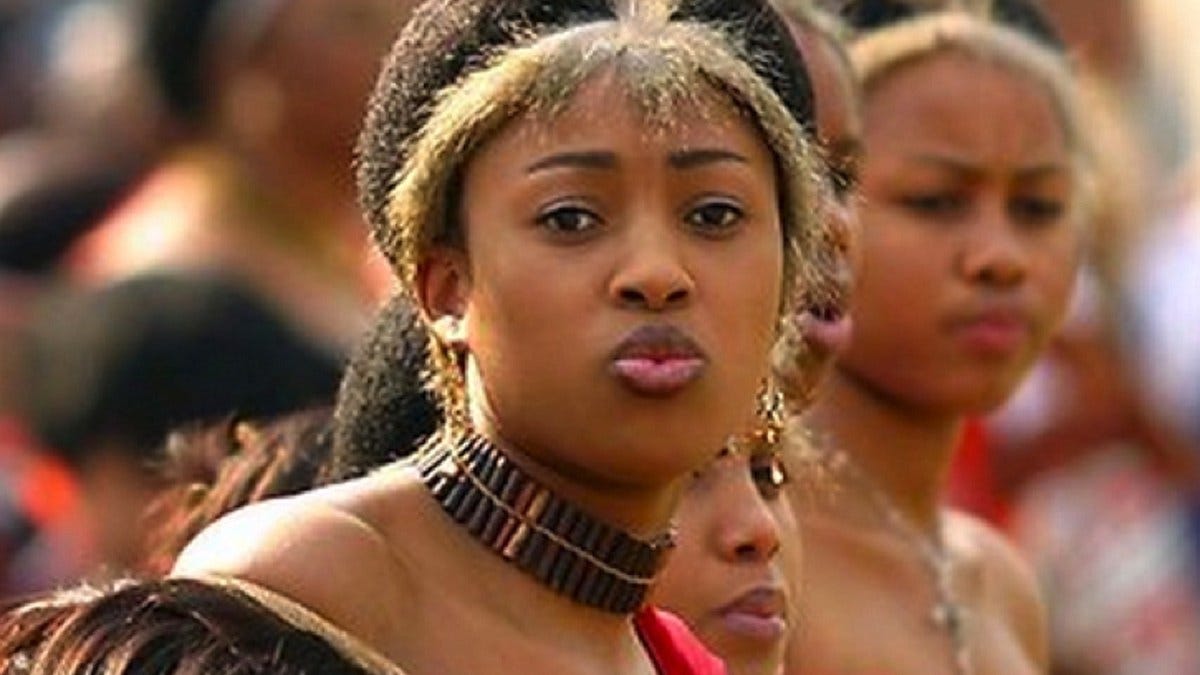
Unfazed by the churn rate of his harem, Mswati III has gone on to marry more wives to fill the vacuum left behind by those who died or abandoned the royal household.
He married his 14th Queen consort, Sindiswa Dlamini, in 2013, not long after the 7th consort had fled the royal harem. Mswati III was also not bothered that Sindiswa had been a previous lover of his two sons, Prince Majahawonkhe and Prince Bandzile.
Mswati III’s marriage to Nomcebo Zuma last year ended in disaster that reveberated beyond the borders of Swaziland.
Unlike other wives, Nomcebo is neither a citizen of Swaziland nor an ethnic Swazi. She is an ethnic Zulu from South Africa. More importantly, she is the daughter of the extremely corrupt Jacob Zuma, who was forced by the Parliament of South Africa to resign as President over corruption allegations in February 2018. Long before that event, his tenure as Deputy President from 1999 to his dismissal in 2005 was dogged by a bribery scandal involving an arms deal.
Separately, he faced rape charges in 2006, which was later dismissed by Johannesburg High Court on grounds that the sexual act with his HIV-positive accuser was consensual.
Jacob Zuma faced public ridicule in South Africa when he claimed that taking a shower after engaging in unprotected sex in 2005 with his accuser had reduced his risk of contracting HIV/AIDS. His accuser died of the disease on 8 October 2016. Interestingly, he is still free of the disease.
Following a 15-month jail sentence imposed in 2021, Jacob Zuma was disqualified from seeking elected office in 2024 by the Constitutional Court of South Africa. He was also expelled from his political party of 45 years, the African National Congress (ANC).
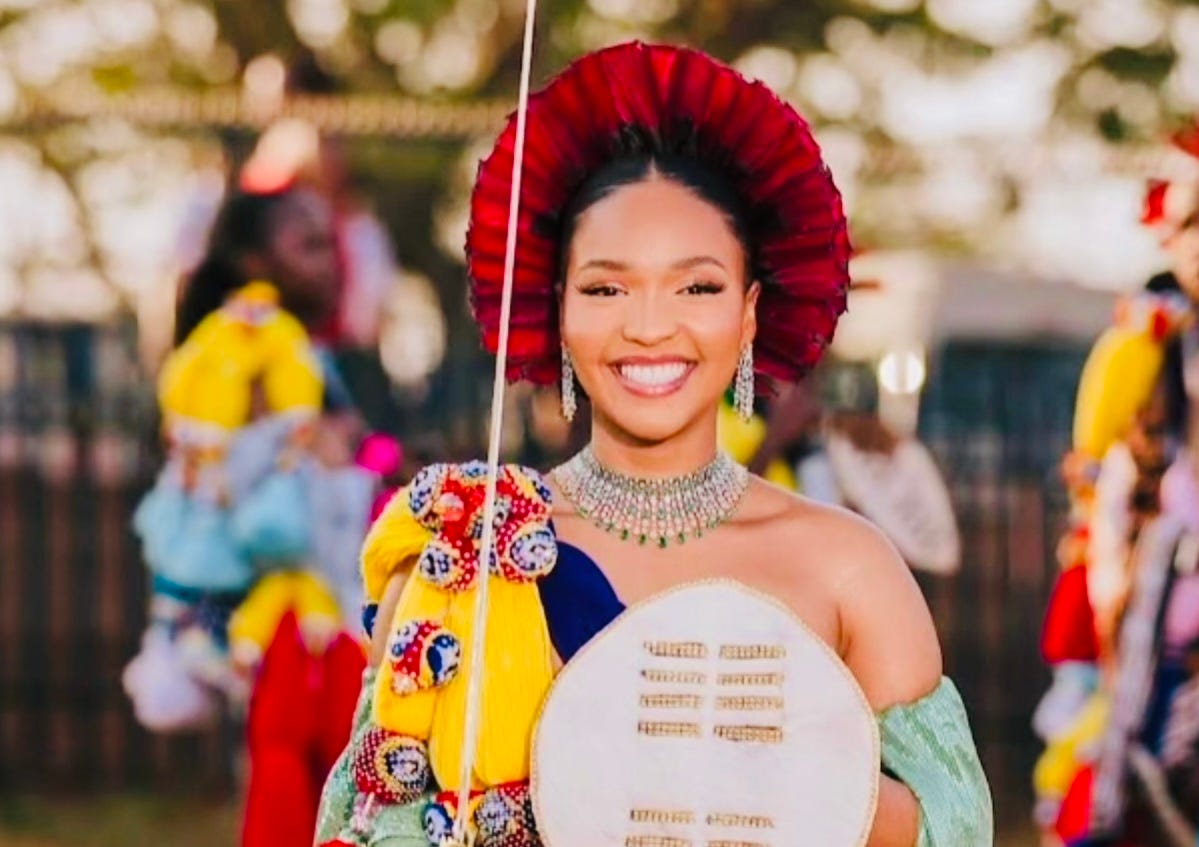
Despite being a staunch advocate of polygamy himself, Jacob Zuma was opposed to his daughter’s engagement to Mswati III following her bare-breasted performance in the Reed Dance Festival last year. Jacob only relented after his daughter insisted on marrying the absolute monarch.
However, Nocembo Zuma’s time as the 16th Queen consort was short-lived. She complained that the king had only been with her for three months before he lost interest and turned his attention to his other wives. After abandoning King Mswati III and the royal court, she told the South African press that she could not tolerate “spending months without seeing her husband”.
In a bid to bring back Nocembo, King Mswati III sent a royal delegation to South Africa to meet with Jacob Zuma. However, the former South African President refused to receive the delegation, stating that he has always been against the marriage.

Mswati III has been criticized not just for his profligacy, but for his failure to effectively combat scourge of the HIV/AIDS. Swaziland has a population of 1.3 million citizens and one of the world’s highest rates of HIV infection rates.
40% of the adult population of Swaziland was HIV positive in 2001. To combat the disease, the king imposed a ban on sexual relations for girls younger than 18. However, he lifted the ban in 2005 in order to have sexual relations with 17-year-old Phindile Nkambule who had caught his eye during the Reed Dance Festival.
In accordance with antiquated Swazi traditions, royal marriage cannot happen until the prospective bride has fallen pregnant. Phindile got pregnant in 2007 and was elevated to the 13th Queen Consort. The king was pleased, but HIV/AIDS statistics was not.
Although the percentage of sufferers in the national population fell from 40% in 2001 to 31%, in 2020, the Kingdom of Swaziland remains the country with the highest prevalence rate of HIV/AIDS in the world.
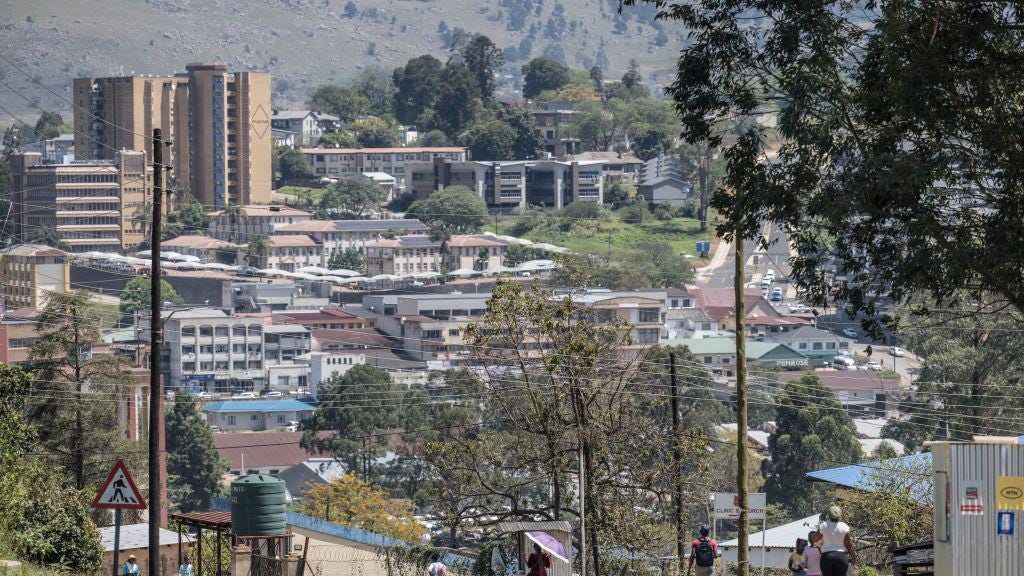
Of course, none of that would be of any interest to Donald Trump, who is famous for his lack of worldly knowledge. The US President wanted more dumping sites for his migrant refugees, and Swaziland was a good place to look for one.
The absolute monarchy was wary of offending the famously mercurial Orange Strongman in the White House. On 2 April 2025, the Swazi authorities witnessed Trump’s arbitrary imposition of 50% tariff on Lesotho’s exports to the United States. South Africa got 30% tariff, and Swaziland itself got away with the basic 10% tariff imposed on all countries of the world.
By August 2025, Trump had reduced the tariff imposed to Lesotho to 15% and exempted Swaziland entirely from any tariffs. The 30% tariff imposed on South Africa remained in place for purely political reasons.
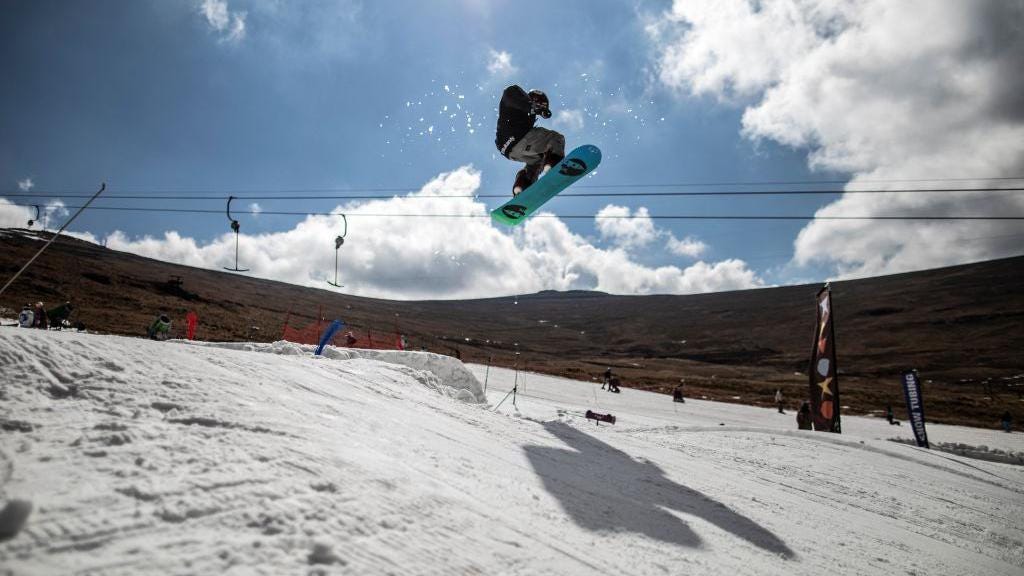
Being one of six African countries exempted from US tariffs, Swaziland has been keen not to do anything to jeopardize its relationship with the Trump Administration.
Therefore, when Trump asked Swaziland to receive some foreign criminal deportees, the small African kingdom accepted. The Swazi population was irate when it was publicly announced that Trump’s deportees would be dumped in their country.
Despite public uproar, Swazi authorities received five deportees from USA in July 2025. The deportees hailed from Cuba, Laos, Vietnam, Yemen and Jamaica.
On Twitter, US Assistant Secretary Tricia McLaughlin described the deportees as “depraved monsters” and proceeded to enumerate their criminal convictions for murder, child rape and robbery.
****** Photos can be enlarged by clicking on them ******
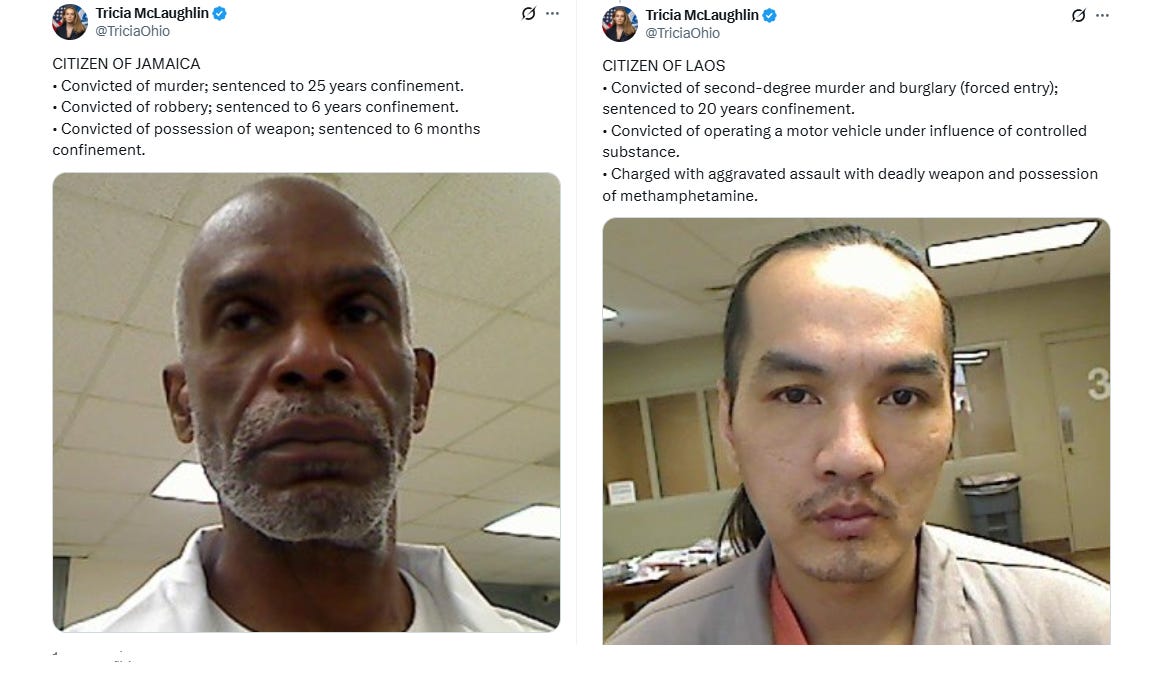
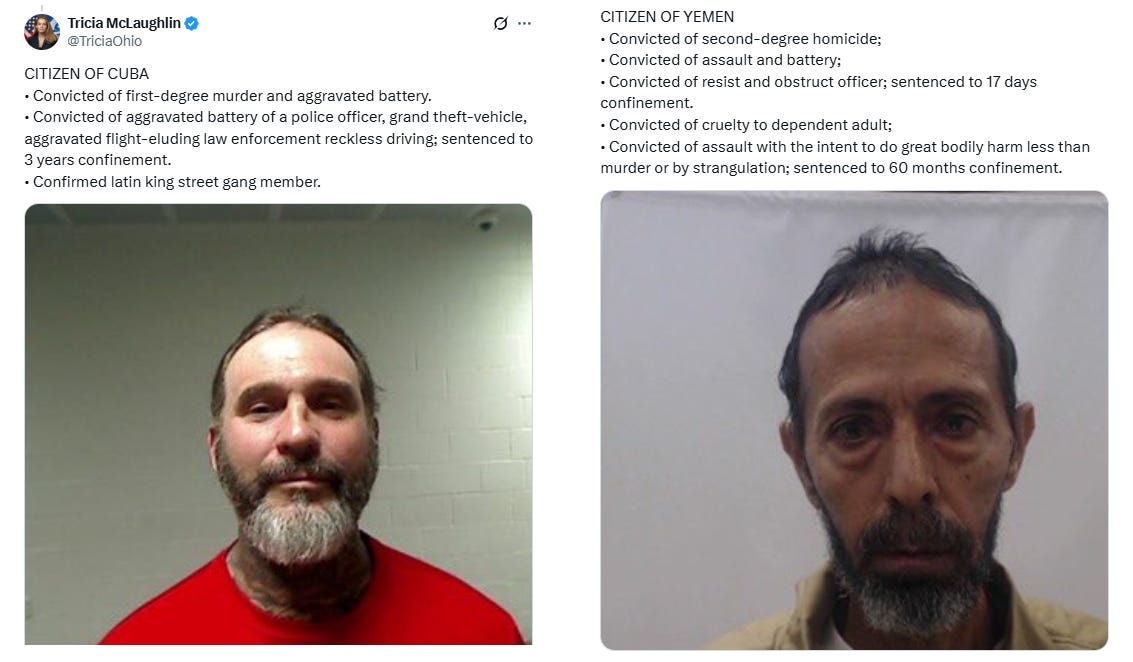
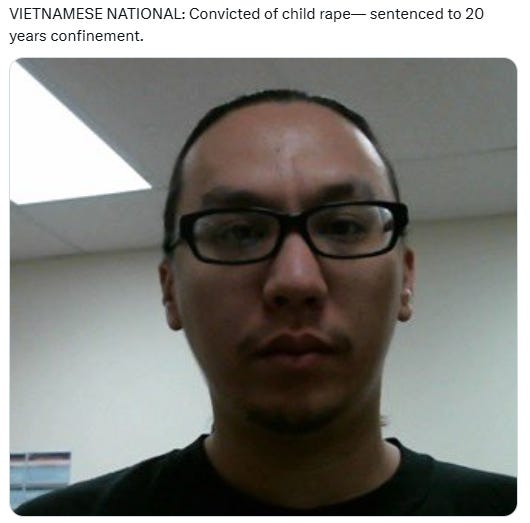
Ordinary citizens of Swaziland were not the only ones that expressed alarm at the decision to receive the deportees. Neighbouring South Africa also raised concerns about Swaziland’s reception of dangerous criminals deported from USA, citing the porous borders between the two countries.
South Africa has since declared the deportations to Swaziland a “provocation by the United States and a direct national security threat”.
One South African diplomat told CNN International that “everyone knows that these fellows [the deported convicts] would want to move to South Africa”. The official revealed that Trump had originally wanted to deport the foreign criminals to South Africa. However, the multi-party coalition government led by President Ramaphosa rejected Trump’s request. Thereafter, the Orange Strongman approached the Swazi authorities with the same request.
In response to the uproar at home and abroad, the authorities in Swaziland moved to reassure everyone that it would hold all five deportees in a maximum security jail before repatriating them gradually to their countries of origin.
Of all the deportees, the case of Jamaican citizen, 62-year-old Orville Isaac Etoria, has been covered extensively in the Euro-American mainstream media. Orville’s case generated alarm among American human rights campaigners because he had lived in the United States since the age of 12 and held a permanent residency status in the country.
According to the Legal Aid Society of New York, Orville spent 25 years in jail for various crimes, including the fatal shooting of a man in Brooklyn.
While serving his sentence in prison, Orville became a changed man. He earned a Bachelor’s degree and began a Master’s program with Union Theological Seminary. Upon his release, he completed the mandated parole and became a free man. He was working as a case manager at a men’s shelter when he was arrested by US immigration officials.
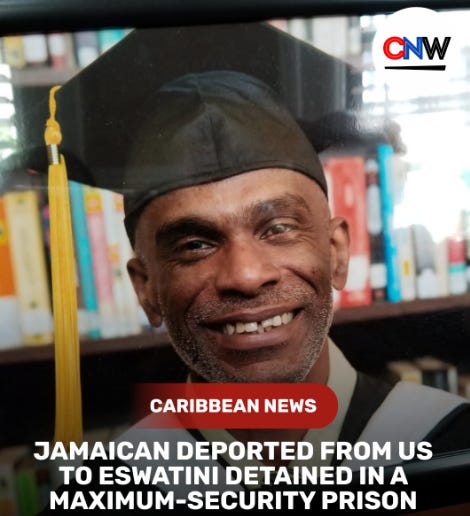
Being a lawful permanent resident of the United States did not protect Orville from being lumped in together with illegal migrants and other foreign convicted criminals pencilled down for deportation to a third country.
Despite the frantic efforts of his American lawyers to have him returned to the United States, Orville consented to Swaziland’s plan to send him on to Jamaica, the country of birth he had not lived in for 50 years.
Local lawyers in Swaziland have demanded access to the remaining deportees detained in prison, but the government has rebuffed their request. Legal case has been filed in Swazi courts to force the government to revoke its agreement to accept the foreign deportees.
I doubt the court’s verdict will make any difference, considering the tendency of Swazi government officials to ignore certain court orders.
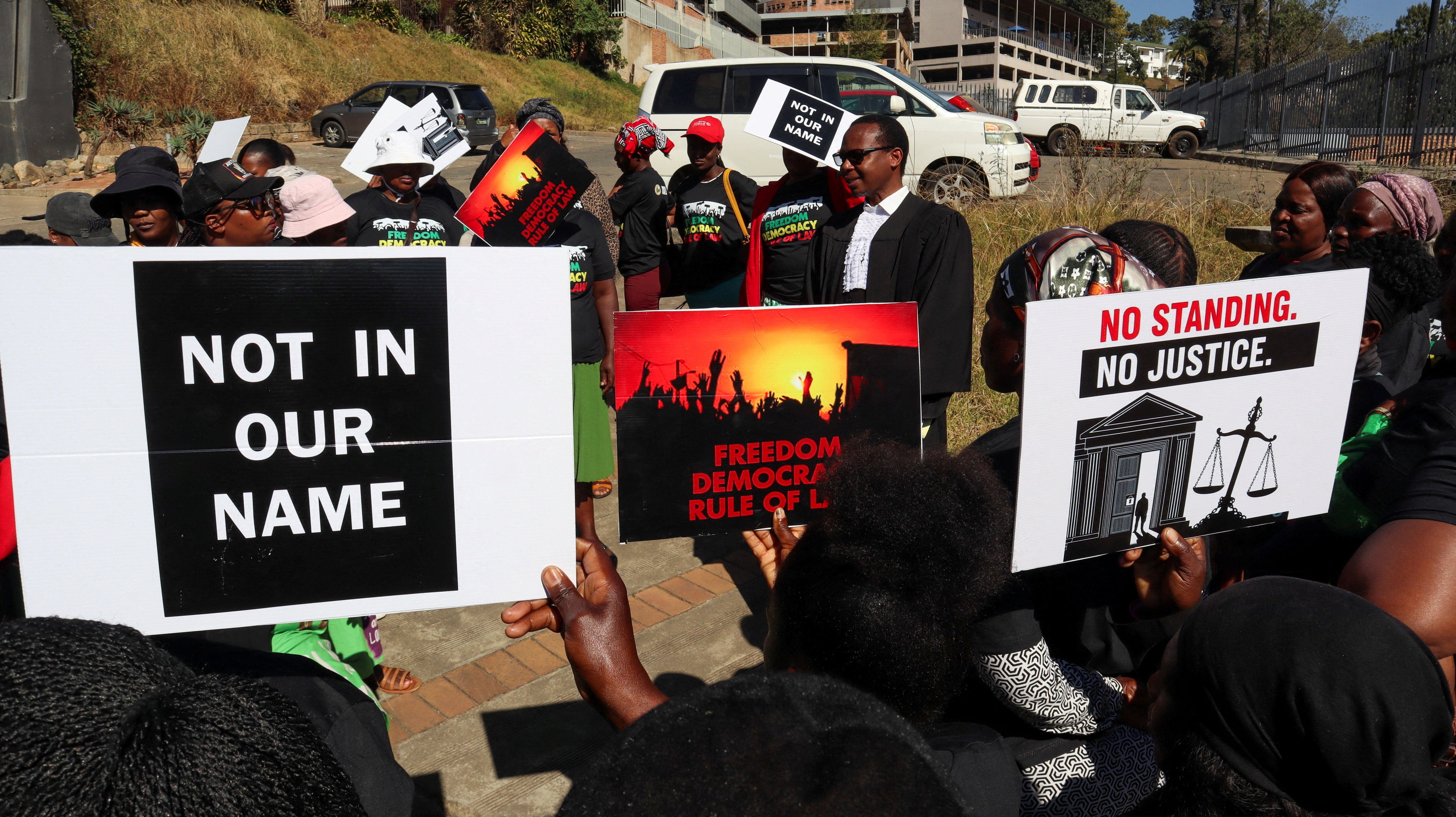
I also believe the legal arguments of the human right lawyers suing the Swazi government to be weak. In a kingdom governed by an absolute monarch, it is absurd to claim that the US-Swazi agreement is invalid because it was not ratified by a bicameral parliament that functions largely as an advisory body for Mswati III.
The king appoints 67% of the individuals that serve as senators in the upper chamber of parliament (i.e. the Senate). The remaining 33% senators are elected by legislators in the lower chamber of parliament (i.e. the House of Assembly). By law, the Senate can seat up to a maximum of 31 senators, with at least 13 of them required to be female. Currently, the Senate of Swaziland has 30 senators—15 males and 15 females.
By law, the lower parliamentary chamber —House of Assembly— can have a maximum of 76 legislators. Currently, it has 73 legislators. Ten of them are directly appointed by the king without any election. The remaining 63 legislators are pre-screened candidates who contested and won local elections in their assigned constituencies. The pre-screening of candidates for parliamentary elections is handled by traditional chiefs that take their marching orders from the king.
In keeping with the gender quota system, there are 15 female legislators in the House of Assembly. Interestingly, there is a lone white Afrikaner among the 58 male legislators.
White citizens of Swaziland constitute 3% of the national population. They are mostly people of British descent, with a sprinkling of Portuguese and Afrikaners.
The black population of Swaziland also has some diversity within it. Ethnic Swazis (84.3%) are the largest single group in the country, followed by Zulus (9.9%) and Tsongas (2.5%).
South Asians from the Indian subcontinent constitute a tiny fragment of the national population of Swaziland.
While lawyers in Swaziland were busy filing their case in the local courts, it was revealed that the government of Russell Dlamini— the Prime Minister handpicked by King Mswati III— had initially asked for 500 million dollars from the Trump Administration to accept deportees from the United States.
Nonetheless, confidential documents seen by media reporters state that Swaziland officials had lowered their price to about 10 million dollars in exchange for receiving more than 150 foreign deportees from the United States.
Trump Administration officials have already signalled their intention to deport Salvadoran illegal migrant, Kilmar Abrego Garcia, to Swaziland in the near future.
Of course, Kilmar could be sent home to his native El Salvador, which would gladly take him back. However, the Trump Administration has shown a preference for dumping deportees randomly in third countries where they have no family or national ties.
The Trump Administration officials have justified deportations to third countries by claiming that the native countries of the deportees had declined to repatriate them.
However most of those claims are false. Jamaican authorities were not even consulted before US permanent resident Orville Etoria was deported to an African country where he has no family or national ties. Similarly, deportees of other nationalities were sent to third countries without any attempt to contact their native countries for repatriation.
African nations currently receiving deportees from the USA are gradually forwarding them to their countries of origin.
Click on the yellow image below to donate to my Tip Jar at Buy Me A Coffee

What a read! Thanks for going into so much detail, but keeping the main narrative going.
I learned so much from this, many thanks.